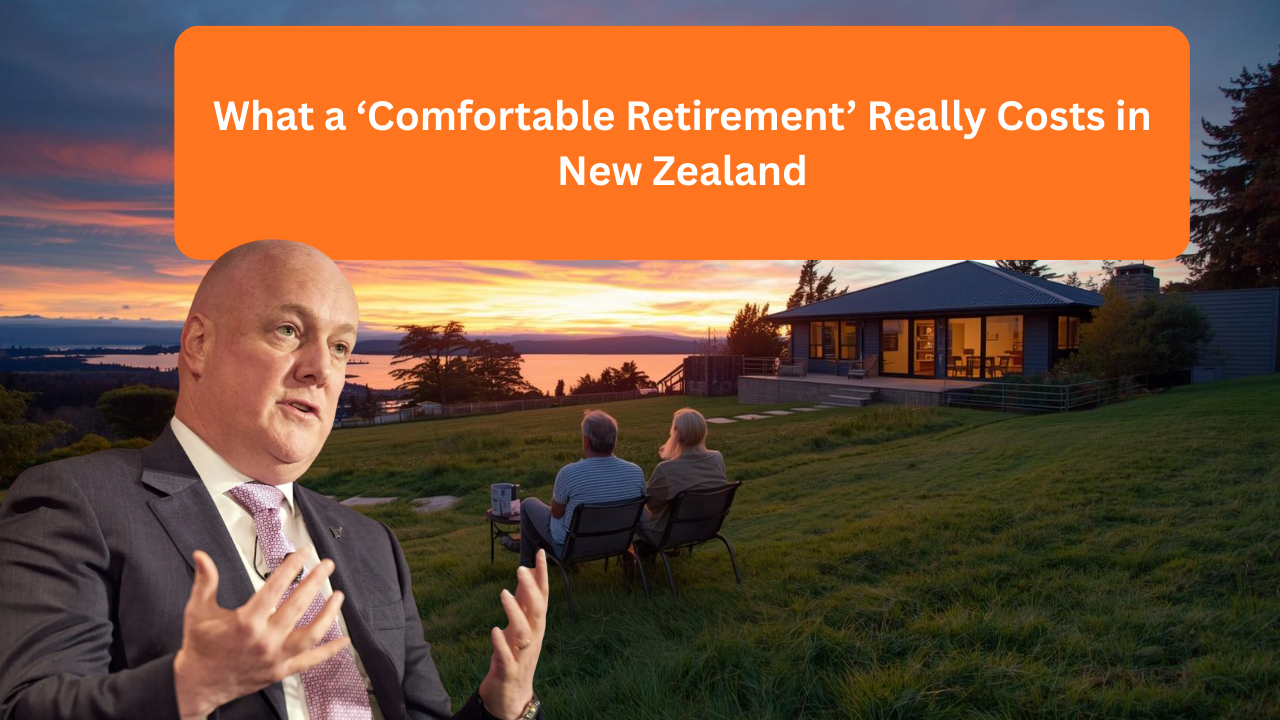
For many New Zealanders, retirement is imagined as a time of calm — no alarm clocks, fewer financial pressures, and enough income to enjoy everyday comforts without constant worry. But as more people reach retirement age, a hard question keeps coming up: what does a “comfortable retirement” actually cost in New Zealand today?
The answer is confronting for many. A comfortable retirement is no longer just about covering the basics. Rising housing costs, healthcare expenses, and longer life expectancy have reshaped what retirees need to feel secure. For some, NZ Super provides a foundation. For others, it falls well short of what’s required to live comfortably rather than just survive.
Here’s a clear look at what a comfortable retirement really costs in New Zealand — and why the gap between expectation and reality is growing.

What “Comfortable Retirement” Really Means
Comfort means different things to different people, but common expectations tend to overlap.
For most retirees, a comfortable retirement includes:
- Secure housing without constant stress
- Ability to pay bills on time
- Healthy, varied food
- Access to healthcare when needed
- Occasional social activities and outings
- Some flexibility for travel or hobbies
This is not luxury living. It’s about stability, dignity, and choice.
The Difference Between “Basic” and “Comfortable”
Many retirees live on a basic standard rather than a comfortable one.
A basic retirement often involves:
- Strict budgeting every week
- Limited discretionary spending
- Little room for unexpected expenses
- Heavy reliance on NZ Super alone
A comfortable retirement allows breathing room — and that difference has a real price tag.

Housing: The Biggest Cost Factor
Housing is the single largest driver of retirement costs.
Whether you own or rent makes a dramatic difference:
- Mortgage-free homeowners face rates, insurance, and maintenance
- Renters face ongoing and often rising rent
In many regions, rent alone can consume more than half of NZ Super, making comfort extremely difficult without additional income.

Owning a Home in Retirement
Homeowners are generally better positioned.
However, they still face:
- Council rates that rise annually
- Insurance premiums increasing sharply
- Maintenance and repair costs
- Energy costs for heating and cooling
Even without rent, housing remains a major expense.
Renting in Retirement
Renting retirees face the greatest pressure.
Challenges include:
- Rent increases that outpace income
- Limited security of tenure
- Difficulty relocating later in life
For renters, a comfortable retirement requires significantly higher income than NZ Super alone.

Everyday Living Costs Add Up Quickly
Beyond housing, daily expenses are rising steadily.
Key ongoing costs include:
- Groceries
- Power and heating
- Transport or vehicle expenses
- Internet and phone services
- Clothing and personal items
Individually these costs may seem manageable, but together they consume a large share of retirement income.

Healthcare Costs Increase With Age
Healthcare is one of the most underestimated retirement expenses.
As people age, costs often increase due to:
- More frequent GP visits
- Specialist appointments
- Prescriptions
- Dental and vision care
- Mobility or support services
While some healthcare is subsidised, many costs are not fully covered.
Social Life and Wellbeing Also Cost Money
A comfortable retirement includes more than survival.
Social connection often involves:
- Café visits
- Community activities
- Family travel
- Hobbies and memberships
Without room for these, retirement can become isolating — even if basic needs are met.
How Much Does a Comfortable Retirement Cost?
While costs vary by location and lifestyle, broad estimates give a useful guide.
A commonly cited benchmark suggests:
- A single person needs significantly more than NZ Super alone for comfort
- A couple benefits from shared costs, but still requires additional income
These estimates assume modest comforts, not luxury spending.
Where NZ Super Fits Into the Picture
NZ Super remains the core income source for most retirees.
It is administered through Ministry of Social Development and is designed to provide a base level of support.
However:
- NZ Super is not designed to fund a fully comfortable lifestyle on its own
- Its purchasing power varies greatly by location
- It does not adjust for housing costs
For many, NZ Super covers the basics — and little more.
Location Can Change the Cost Dramatically
Where you live plays a major role.
In lower-cost regional areas:
- Housing is cheaper
- Transport costs may be lower
- NZ Super stretches further
In major cities:
- Rent and rates are higher
- Everyday expenses add up faster
- A comfortable retirement costs significantly more
Two retirees with the same income can experience very different realities.
Inflation Is the Silent Pressure
Inflation quietly erodes comfort over time.
Even modest inflation:
- Reduces purchasing power each year
- Increases essential costs faster than income
- Forces retirees to cut back gradually
This is why comfort today does not guarantee comfort in ten years.
The Role of Savings and KiwiSaver
Private savings and KiwiSaver often bridge the gap.
They are used for:
- Covering rent or rates
- Paying healthcare costs
- Funding travel or emergencies
However, savings must now last longer than in previous generations, increasing the risk of running out later in life.
Why Life Expectancy Changes Everything
People are living longer, which reshapes retirement costs.
Longer lives mean:
- More years relying on fixed income
- Greater exposure to inflation
- Higher cumulative healthcare costs
A comfortable retirement must now be funded over decades, not just a few years.
Real Experiences From Retirees
A retiree in regional Canterbury said, “I’m comfortable, but only because I own my home. Without that, NZ Super wouldn’t be enough.”
Another renter shared, “I manage, but I wouldn’t call it comfortable. One big bill would change everything.”
These stories reflect a widening divide.
Why Expectations and Reality Often Don’t Match
Many people plan retirement based on outdated assumptions.
They expect:
- Lower living costs
- Stable housing
- Shorter retirement periods
The reality is very different, especially for younger generations approaching retirement now.
What Future Retirees Should Take From This
The key lesson is planning for comfort, not just survival.
That means:
- Being realistic about housing costs
- Accounting for healthcare and inflation
- Building buffers rather than minimum targets
- Thinking carefully about where to live
Comfort doesn’t happen by accident anymore.
What You Should Keep in Mind
A comfortable retirement in New Zealand today:
- Costs more than many expect
- Depends heavily on housing status
- Requires planning beyond NZ Super
- Is shaped by location and longevity
Understanding the real costs early gives people the chance to adjust — before it’s too late.
Questions and Answers About Retirement Costs in NZ
Is NZ Super enough for a comfortable retirement?
For most people, no — it covers basics but not comfort.
Does owning a home make retirement easier?
Yes, significantly.
Are renters worse off in retirement?
Generally, yes, due to ongoing housing costs.
Do costs keep rising in retirement?
Yes, especially healthcare and housing.
Does location really matter?
Yes, it can change costs dramatically.
Is a comfortable retirement possible on NZ Super alone?
Only in limited circumstances.
Do couples need less than singles?
They benefit from shared costs, but still face pressure.
Is inflation a major risk?
Yes, over long retirements.
Should people plan for healthcare costs?
Absolutely.
Do savings need to last longer now?
Yes, due to longer life expectancy.
Is retirement more expensive than before?
In most cases, yes.
What’s the biggest mistake people make?
Underestimating long-term costs.
Can planning early improve outcomes?
Yes, dramatically.
What’s the main takeaway?
Comfort in retirement has a real cost — and it’s higher than many expect.







Leave a Comment