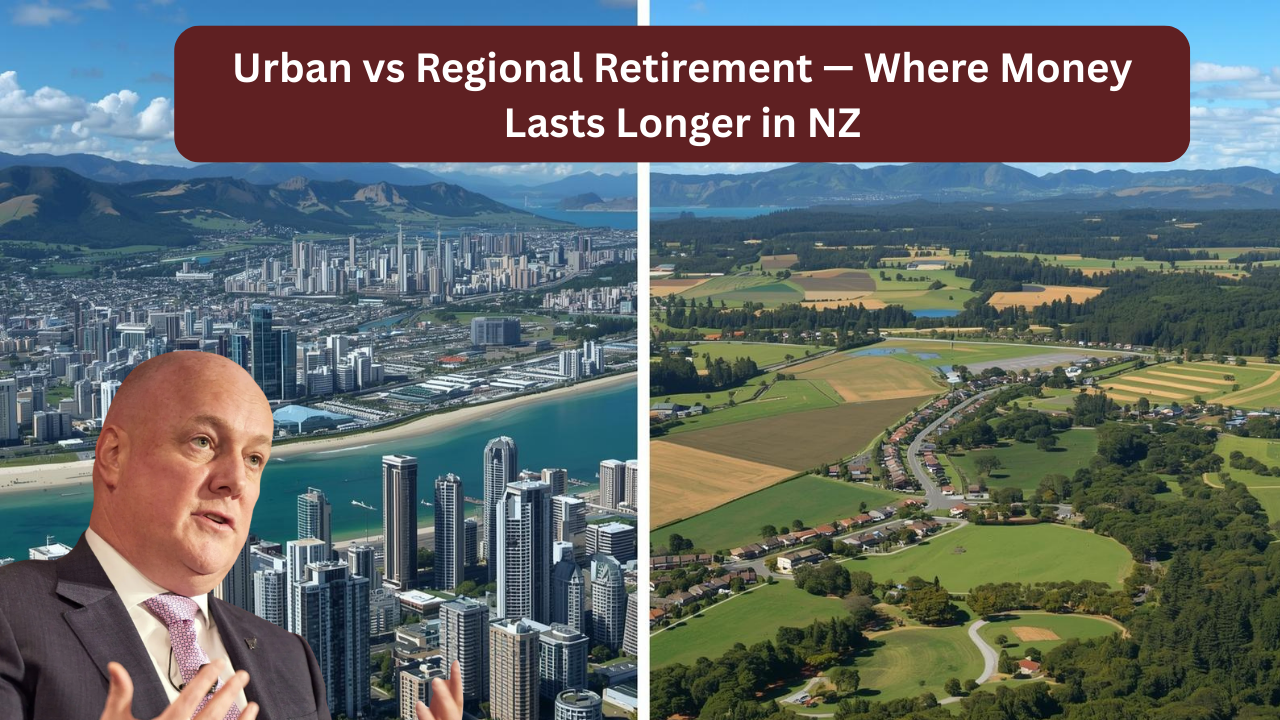
For many New Zealanders approaching retirement, one question is becoming just as important as how much they’ve saved: where should I live so my money lasts longer? With NZ Super paid at the same rate nationwide, the difference between retiring in a major city or a regional town can mean the difference between constant financial stress and a more comfortable, secure lifestyle.
As living costs continue to rise, especially in urban centres, more retirees are reassessing long-held assumptions about staying close to cities. For some, moving regionally has extended the life of their savings by years. For others, staying urban still makes sense — but only with careful planning.
Here’s a clear, practical look at urban versus regional retirement in New Zealand, and where money really lasts longer.

Why Location Matters More Than Ever in Retirement
Unlike working life, retirees usually can’t increase income easily.
That means:
- Fixed or semi-fixed income must stretch further
- Cost increases hit harder
- Location choices have long-term financial consequences
With NZ Super providing the same payment everywhere, expenses — not income — become the key variable.

The Cost Reality of Urban Retirement
Urban centres offer convenience, but they come at a price.
In large cities, retirees face:
- High rent or property prices
- Rising council rates
- Higher insurance premiums
- More expensive daily essentials
Even modest lifestyles can become costly in urban environments.

Housing: The Deciding Factor
Housing costs create the biggest divide.
Urban retirement often involves:
- Renting well into later life
- Competing in tight rental markets
- Limited downsizing options
Regional retirement typically offers:

- Lower rents
- More affordable home ownership
- Greater choice within the same budget
Housing alone can determine whether NZ Super feels manageable or inadequate.
Renting in Cities vs Regions
For retirees who rent, the difference is stark.
In cities:

- Rent may consume over half of NZ Super
- Increases are frequent
- Long-term security is uncertain
In regional areas:
- Rent is often significantly lower
- Increases tend to be smaller
- Options may be more flexible
This is why many renters consider regional moves first.
Everyday Living Costs Add Up Differently
Beyond housing, daily costs also vary.

Urban living often means:
- Higher grocery prices
- More paid services
- Costly parking and transport
Regional living can reduce:
- Travel distances
- Transport expenses
- Certain service costs
These savings compound over time.

Transport: Convenience vs Cost
Cities offer public transport, but it isn’t always cheap or accessible.
Urban retirees may still face:
- Car ownership costs
- Parking fees
- Higher fuel prices
Regional retirees often:

- Drive shorter distances
- Face lower congestion
- Spend less on transport overall
However, access to transport services should be considered carefully.
Healthcare Access: A Key Trade-Off
Healthcare is where urban living often wins.
Cities provide:
- More hospitals and specialists
- Shorter wait times for private services
- Easier access to diagnostics
Regional areas may have:
- Fewer specialists
- Longer travel times for treatment
- Stronger GP relationships
Retirees must balance cost savings with healthcare access needs.
Social and Lifestyle Considerations
Lifestyle is not just about money.
Urban retirement offers:
- Cultural events
- Diverse dining options
- Proximity to family for some
Regional retirement often provides:
- Stronger community connections
- Slower pace of life
- Lower stress environments
Quality of life looks different depending on personal values.
The Impact on Savings Longevity
The real question is how long money lasts.
Many retirees find:
- Savings deplete faster in cities
- Regional living extends savings significantly
- NZ Super stretches further with lower costs
Over a 20–30 year retirement, these differences are substantial.
Real Experiences From Retirees Who Moved
A retiree who left Auckland for a regional town said, “My income didn’t change, but my stress disappeared. I finally stopped worrying about every bill.”
Another shared, “I miss the city sometimes, but I don’t miss the constant financial pressure.”
These experiences reflect a growing trend.
Why Some Retirees Still Choose Cities
Despite costs, some retirees stay urban by choice.
Common reasons include:
- Close proximity to family
- Established healthcare relationships
- Familiarity and routine
For homeowners with low housing costs, urban retirement can still be comfortable.
The Role of Home Ownership
Home ownership changes the equation dramatically.
Urban homeowners:
- Avoid rent but face high rates and insurance
- Often sit on valuable assets
Regional homeowners:
- Enjoy lower ongoing costs
- Have less capital tied up in housing
Owning a home makes either option more viable.
Government Perspective on Location Choice
NZ Super is administered by Ministry of Social Development and does not adjust payments based on location.
This means:
- Cost differences are entirely borne by retirees
- Moving to reduce costs is a personal decision
- Location planning is essential
The system assumes individuals adapt to local cost realities.
Things to Consider Before Moving Regionally
A move should be planned carefully.
Key questions include:
- Access to healthcare
- Transport options
- Climate preferences
- Proximity to family and support networks
Lower costs alone should not be the only factor.
Trial Periods and Gradual Transitions
Many retirees choose to:
- Rent in a region before committing
- Spend extended periods in different locations
- Maintain ties to their original city
This reduces regret and allows adjustment.
What This Means for Future Retirees
For people planning retirement now:
- Location should be a core part of planning
- Urban costs need realistic assessment
- Regional options deserve serious consideration
Where you live may matter more than how much you save.
What You Should Keep in Mind
Urban retirement offers convenience but comes at a cost.
Regional retirement often:
- Makes NZ Super go further
- Reduces financial stress
- Extends the life of savings
There is no universal answer — but understanding the trade-offs is essential.
Questions and Answers About Urban vs Regional Retirement
Does NZ Super pay more in cities?
No, it is the same nationwide.
Do retirees save money by moving regionally?
In many cases, yes — especially renters.
Is healthcare worse in regional areas?
Access can be more limited, but varies by location.
Do couples benefit more from regional living?
Yes, shared costs stretch further.
Is it risky to move away from family?
It depends on personal support needs.
Do urban homeowners struggle less?
Often yes, if housing costs are low.
Can savings last longer regionally?
Yes, significantly in many cases.
Is public transport better in cities?
Generally yes, but costs may be higher.
Should retirees move early or later?
Earlier moves are usually easier.
Is lifestyle satisfaction higher regionally?
Many retirees report lower stress and better wellbeing.
Does location affect eligibility for NZ Super?
No.
Are regional rents rising too?
Yes, but generally from a lower base.
Can people move back later?
Yes, but costs may be higher.
What’s the main takeaway?
Where you retire can matter more than how much you earn.










Leave a Comment