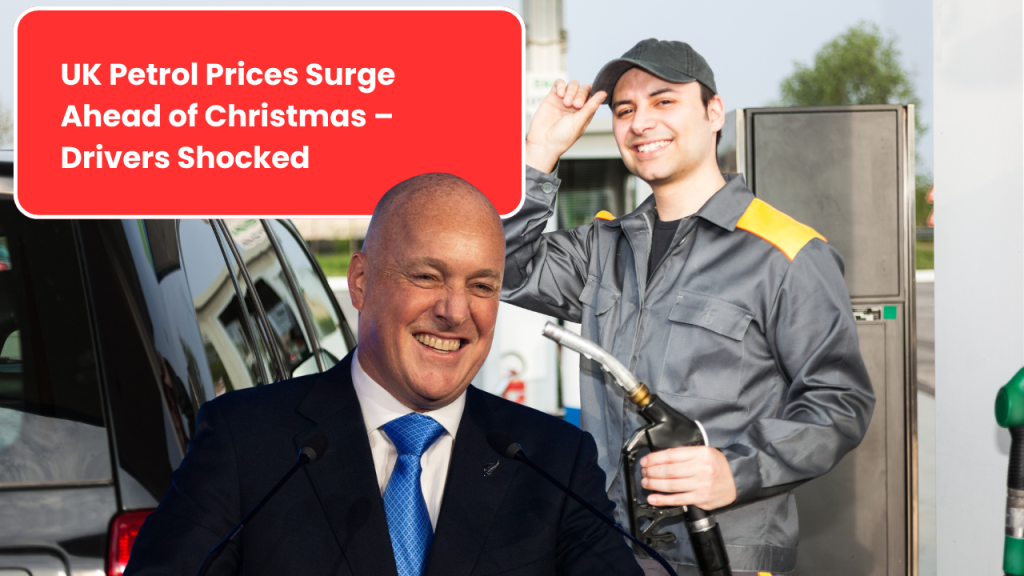
With Christmas just weeks away, UK drivers are being hit by a sudden surge in petrol prices, leaving many stunned at the pump and scrambling to adjust holiday plans. What was expected to be a relatively stable period for fuel costs has instead turned into an unwelcome shock, particularly for families planning long journeys, last-minute shopping trips, or festive visits across the country.
Across England, Scotland, Wales, and Northern Ireland, motorists report noticeable price jumps within days, not weeks. In some areas, drivers say prices rose almost overnight, catching even regular commuters off guard.

In Birmingham, delivery driver Paul said the increase hit his household hard. “I filled up at the start of the week, then went back a few days later and it was already several pence higher per litre. That adds up fast when you drive every day.”
In rural Devon, a pensioner said fuel costs are now shaping family decisions. “We’re thinking twice about visiting relatives. It’s not just petrol — it’s everything rising at once.”
Here’s what’s behind the Christmas fuel surge, why it’s happening now, who is most affected, and what UK drivers can realistically do to manage costs.


How big the petrol price increase really is
Drivers are not imagining it. Petrol prices have climbed noticeably in recent weeks, with many areas seeing consistent upward movement rather than isolated spikes.
Key features of the surge include:
- Gradual daily increases rather than one-off jumps
- Larger rises at motorway and rural stations
- Less price competition in smaller towns
- Faster price changes than earlier in the year
For households already budgeting tightly, even a few extra pence per litre translates into a significant monthly increase.

A fuel market analyst said, “What makes this surge painful is timing. December is when people drive more, not less.”
Why petrol prices are rising just before Christmas
Several factors are converging at once, creating pressure on fuel prices at exactly the wrong time for drivers.
Key drivers behind the surge include:

- Increased pre-Christmas travel demand
- Global oil market fluctuations
- Higher wholesale fuel costs filtering through
- Seasonal logistics pressures
- Reduced price competition in some regions
Retail fuel prices often lag behind wholesale changes, meaning increases can arrive suddenly after weeks of apparent stability.
Christmas travel demand is a major factor
December brings a predictable rise in fuel demand.
Drivers are:
- Travelling longer distances to visit family
- Making more shopping trips
- Taking end-of-year breaks
- Using cars more frequently in cold weather
Fuel retailers know demand rises in December, which reduces pressure to keep prices low.
A transport economist said, “Demand strengthens retailers’ pricing power. That’s always felt most at Christmas.”
Rural and motorway drivers hit hardest
The price surge is not uniform.

Drivers facing the steepest increases include:
- Rural residents with fewer station options
- Motorway users paying premium rates
- Commuters without alternative transport
- Delivery and care workers driving daily
In some rural areas, prices are significantly higher than national averages, forcing drivers to pay more simply because of location.
A resident in Northumberland said, “We don’t have choice here. You pay what’s on the sign.”

Why prices feel more painful this year
Fuel prices have surged before — but this year feels different.
That’s because:
- Household budgets are already stretched
- Food and energy costs remain high
- Interest rates have raised living costs
- There’s little financial buffer left
Drivers are less able to absorb even small increases.

A consumer advocate said, “It’s not just petrol. It’s petrol on top of everything else.”
How quickly prices are changing
One of the biggest frustrations for drivers is the speed of change.
Many report:
- Price increases within days
- No clear warning
- Inconsistent pricing between nearby stations
This volatility creates anxiety and makes budgeting difficult.
A commuter in Leeds said, “You don’t know if you should fill up now or wait. Either way, it feels like you lose.”
Why fuel duty hasn’t prevented the surge
Some drivers assume fuel duty freezes should keep prices stable. In reality, duty is only one part of the price.
Fuel prices are influenced by:
- Wholesale fuel costs
- Retail margins
- Distribution costs
- VAT
Even with duty controls, retail prices can rise when other costs increase.
This explains why drivers still feel squeezed despite policy measures.
Impact on families and holiday plans
Families are already adjusting plans in response to higher petrol costs.
Reported changes include:
- Combining trips to reduce driving
- Cutting back on non-essential journeys
- Reconsidering long-distance visits
- Switching travel days to save fuel
A family in Essex said, “We’re still visiting relatives, but we’re sharing cars instead of driving separately.”
Seniors and fixed-income households
Seniors on fixed incomes feel the impact more sharply.
For them:
- Fuel is a necessary expense, not optional
- Public transport may be limited
- Budget flexibility is minimal
Community groups report increased concern among older drivers who rely on cars for medical appointments and essentials.
A senior in Lincolnshire said, “I can’t just drive less. I still need to get places.”
Young drivers and workers under pressure
Young drivers and low-paid workers are also affected.
For them:
- Fuel costs directly reduce take-home pay
- Commuting becomes more expensive
- Alternative transport is often impractical
Delivery drivers, carers, and shift workers feel the impact immediately.
A young worker said, “My fuel costs are eating into what little I earn.”
Why price drops aren’t expected before Christmas
Many drivers hope prices will ease before Christmas Day. Analysts say that’s unlikely.
Reasons include:
- Sustained holiday demand
- Ongoing wholesale cost pressure
- Retailers holding higher margins during peak periods
Any relief is more likely after Christmas, when travel demand drops sharply.
A fuel analyst said, “December is about holding prices, not cutting them.”

What drivers can do right now
While drivers can’t control prices, they can reduce the impact.
Practical steps include:
- Comparing prices locally before filling up
- Avoiding motorway stations when possible
- Filling up earlier in the week
- Combining trips to reduce mileage
- Driving smoothly to improve efficiency
Small adjustments can save meaningful amounts over a month.
Timing matters more than people realise
Fuel prices often rise toward the weekend.
Drivers may save money by:
- Filling up midweek
- Avoiding Friday and Sunday refuels
- Watching local price patterns
Regular commuters often see patterns others miss.
Car efficiency makes a difference
How you drive affects how much fuel you use.
Fuel-saving habits include:
- Gentle acceleration
- Maintaining steady speeds
- Keeping tyres properly inflated
- Removing unnecessary weight
These habits matter more when prices are high.
Electric and hybrid drivers watching closely
Even drivers who don’t rely on petrol are feeling the ripple effects.
Electric and hybrid drivers report:
- Increased charging demand
- Higher public charging costs in some areas
The surge reinforces concerns about transport affordability across all vehicle types.
Why public frustration is growing
Drivers say the biggest frustration isn’t just the cost — it’s unpredictability.
Common complaints include:
- Lack of transparency
- Sudden changes
- Feeling powerless
When prices rise before major holidays, emotions run high.
A driver said, “It feels like bad timing every year — but this year hurts more.”
What the Government says
Officials acknowledge fuel price pressures but point to global factors.
A Government spokesperson said,
“Fuel prices are influenced by international markets. We continue to monitor costs and support motorists where possible.”
Drivers, however, say immediate relief feels limited.
Will prices fall after Christmas
Historically, prices often ease after the holiday period.
Reasons include:
- Reduced travel demand
- Increased competition
- Wholesale cost adjustments
However, the scale of any drop remains uncertain.
Drivers are advised not to rely on post-Christmas relief when budgeting now.
Why this matters beyond December
Fuel prices affect more than travel.
Higher petrol costs feed into:
- Delivery costs
- Food prices
- Service charges
This means the impact can linger even if pump prices later stabilise.
How households are adapting
Many households are responding creatively.
Strategies include:
- Car-sharing for family visits
- Shopping locally instead of driving far
- Delaying non-essential trips
- Budgeting fuel as a fixed priority
These adjustments help stretch limited resources.
What consumer groups are saying
Consumer groups urge transparency and fairness.
They encourage:
- Monitoring local prices
- Supporting fair pricing practices
- Avoiding panic buying
Awareness is the strongest defence against overpaying.
Key things to remember
- UK petrol prices have surged ahead of Christmas
- Timing and demand are major factors
- Rural and motorway drivers are hit hardest
- Price drops before Christmas are unlikely
- Small changes can reduce the impact
- Planning now protects household budgets
The surge is frustrating — but informed drivers can soften the blow.
Q&A: UK petrol price surge explained
- Are petrol prices rising nationwide?
Yes. - Why now?
Holiday demand and wholesale costs. - Are motorway prices higher?
Usually, yes. - Will prices drop before Christmas?
Unlikely. - Are rural areas affected more?
Often. - Can timing save money?
Yes. - Does driving style matter?
Yes. - Are families changing plans?
Many are. - Are seniors affected?
Significantly. - Are young workers affected?
Yes. - Is fuel duty the cause?
No, not alone. - Will prices fall in January?
Possibly. - Should I fill up early?
Often a good idea. - Is this temporary?
Likely, but uncertain. - What’s the best advice now?
Plan fuel use carefully.







Leave a Comment