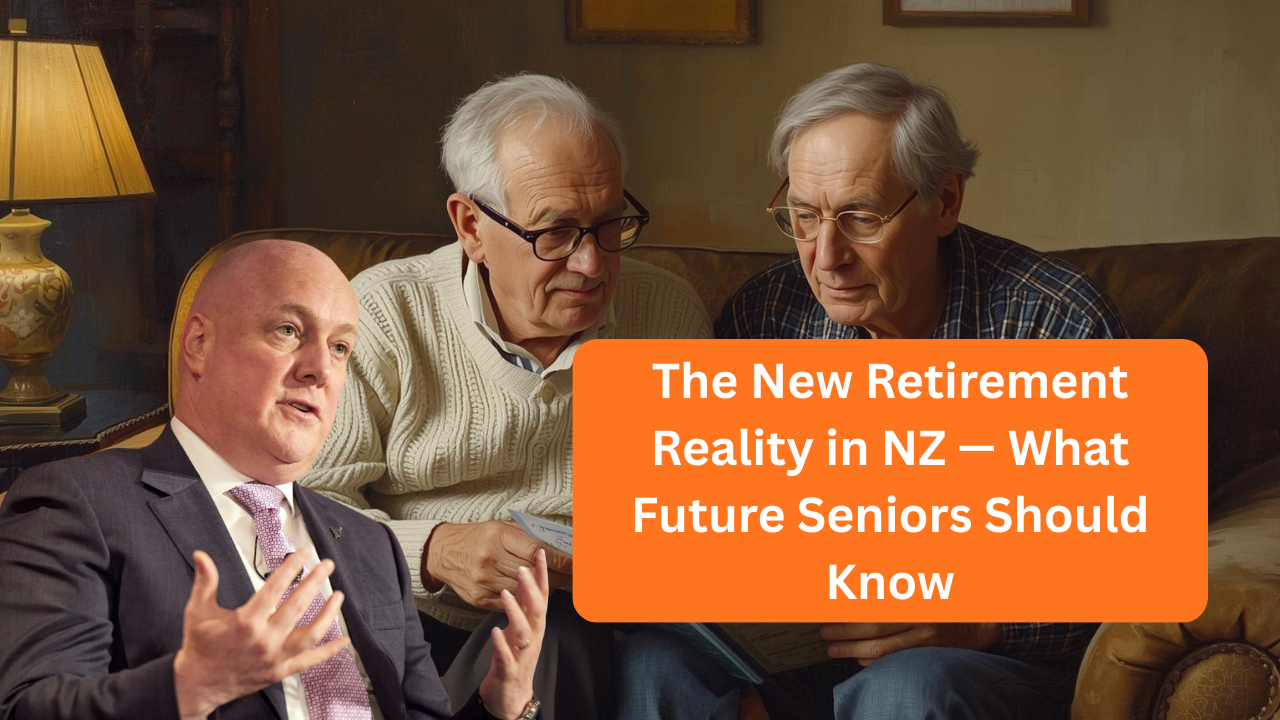
For decades, retirement in New Zealand followed a familiar pattern. You worked, paid off a home if you were lucky, reached 65, and relied on NZ Super to provide a stable foundation for later life. That picture is now changing — quietly, steadily, and in ways many future seniors are not fully prepared for.
Today’s retirement reality looks very different from what current retirees experienced. Rising housing costs, longer life expectancy, higher healthcare expenses, and shifting work patterns are reshaping what it means to retire in New Zealand. For those still in the workforce, understanding this new landscape early could make the difference between comfort and constant financial pressure.
Why Retirement in NZ Is No Longer What It Used to Be
The traditional assumptions around retirement no longer hold.

In the past:
- Home ownership was common by retirement age
- Living costs were lower relative to NZ Super
- Retirement periods were shorter
- Healthcare costs were more manageable
Today, many future retirees face higher debt, longer retirements, and greater reliance on private savings alongside NZ Super.
NZ Super Is Still Central — But Not Enough on Its Own
NZ Super remains the backbone of retirement income for most New Zealanders.
However, for future seniors:
- NZ Super is less likely to cover all essential costs
- Housing alone may consume a large share of income
- Inflation is eroding purchasing power over time
Many people now see NZ Super as a base, not a complete solution.
Housing: The Biggest Game-Changer for Future Retirees
Housing status will define retirement outcomes more than almost anything else.

Future retirees are increasingly:
- Entering retirement while still renting
- Carrying mortgages into their late 60s or 70s
- Facing limited options for downsizing
Without stable housing, NZ Super becomes far harder to stretch.
Renting in Retirement Is Becoming More Common
Renting in retirement was once the exception. Now, it’s becoming normal.

This creates new risks:
- Rent increases that outpace income
- Less security of tenure
- Limited ability to control long-term costs
For renters, retirement planning must now include strategies for managing housing volatility.
Longer Lives Mean Longer Financial Pressure
New Zealanders are living longer than previous generations.
While this is positive, it also means:
- Retirement savings must last longer
- NZ Super must stretch over more years
- Healthcare and care costs increase with age
Outliving savings is becoming a real concern, even for careful planners.
Healthcare Costs Are Rising With Age
Healthcare is one of the most underestimated retirement expenses.

Future seniors are likely to face:
- More frequent GP visits
- Specialist care not fully covered
- Prescription costs over longer periods
- Potential need for in-home or residential care
These costs often rise just as income flexibility declines.
Work in Retirement Is Becoming Normal
Retirement is no longer a clean break from work.

Many future seniors will:
- Continue part-time or casual work
- Freelance or consult using existing skills
- Rely on work to supplement NZ Super
This isn’t always by choice — for many, it’s a financial necessity.
The Psychological Shift: Redefining Retirement
The idea of retirement itself is changing.
Instead of “stopping,” future retirees are:
- Slowing down gradually
- Mixing work with leisure
- Prioritising flexibility over full withdrawal
This shift requires a different mindset and planning approach.
KiwiSaver Helps — But Has Limits
KiwiSaver has improved retirement outcomes for many, but it is not a cure-all.
Challenges include:
- Late entry into KiwiSaver
- Contribution gaps during caregiving years
- Market volatility close to retirement
- Savings not keeping pace with living costs
For many future seniors, KiwiSaver will supplement NZ Super — not replace the need for careful budgeting.
Inflation Is a Silent Threat to Retirement Plans
One of the biggest risks is inflation over long retirements.
Even modest inflation:
- Reduces purchasing power year after year
- Shrinks the real value of fixed incomes
- Makes long-term planning harder
Future retirees must plan for rising costs, not static ones.
Government Support Will Face Increasing Pressure
As the population ages, pressure on public finances grows.
NZ Super is administered through Ministry of Social Development, which already faces rising costs as more people qualify each year.
While NZ Super is unlikely to disappear, future adjustments — such as eligibility age or payment structure — are frequently discussed in policy circles.
Why Certainty Is Harder for Future Seniors
Previous generations retired into relatively stable systems.
Future seniors face:
- Policy uncertainty
- Housing market volatility
- Longer retirement horizons
- Less predictable costs
This makes flexibility and contingency planning essential.
What Future Seniors Should Start Doing Now
Preparation needs to start earlier than before.
Key steps include:
- Reviewing housing plans realistically
- Building savings buffers beyond minimum contributions
- Considering location and cost of living carefully
- Planning for healthcare and later-life support
Waiting until your 60s may be too late to adjust comfortably.
The Importance of Location in Retirement Planning
Where you live will heavily influence your retirement experience.
Future seniors should consider:
- Regions where costs are manageable
- Access to healthcare and transport
- Community support networks
Location decisions can reduce financial stress dramatically.
Social Connection Will Matter More Than Money Alone
Loneliness and isolation are growing concerns.
Future retirees benefit from:
- Strong local networks
- Accessible community spaces
- Opportunities to stay engaged
Social wellbeing supports mental and physical health, reducing other costs over time.
Real Stories From People Planning Ahead
A 52-year-old Auckland worker said, “I used to think retirement started at 65. Now I see it as a transition that starts much earlier.”
Another future retiree shared, “We’re planning where we’ll live before we plan when we’ll stop working.”
These shifts reflect a broader change in mindset.
What This New Reality Means in Simple Terms
In practical terms, the new retirement reality means:
- Less reliance on a single income source
- More emphasis on adaptability
- Greater importance of early planning
Retirement is becoming a longer, more complex phase of life.
What You Should Keep in Mind Going Forward
Future seniors who thrive will be those who:
- Stay informed
- Plan flexibly
- Adjust expectations early
- Accept that retirement is evolving
The goal is not perfection — it’s resilience.
Questions and Answers About the New Retirement Reality in NZ
Is NZ Super still reliable for future retirees?
Yes, but it may not be sufficient on its own.
Will future retirees need more savings?
In most cases, yes.
Is renting in retirement risky?
It can be, especially without long-term stability.
Will people work longer in the future?
Yes, many already are.
Is the retirement age likely to change?
It is debated but not confirmed.
Does KiwiSaver solve retirement challenges?
It helps, but it’s not enough alone.
Are healthcare costs a major concern?
Yes, especially later in life.
Should people plan for inflation?
Absolutely.
Is retirement becoming more expensive?
Yes, overall.
Does location really matter that much?
Yes, it can change everything.
Should planning start earlier than before?
Yes, significantly earlier.
Is retirement still achievable?
Yes, but it looks different now.
Are future retirees worse off than past ones?
Not necessarily — but they face different challenges.
What’s the biggest takeaway?
Retirement in NZ is changing, and preparation matters more than ever.







Leave a Comment