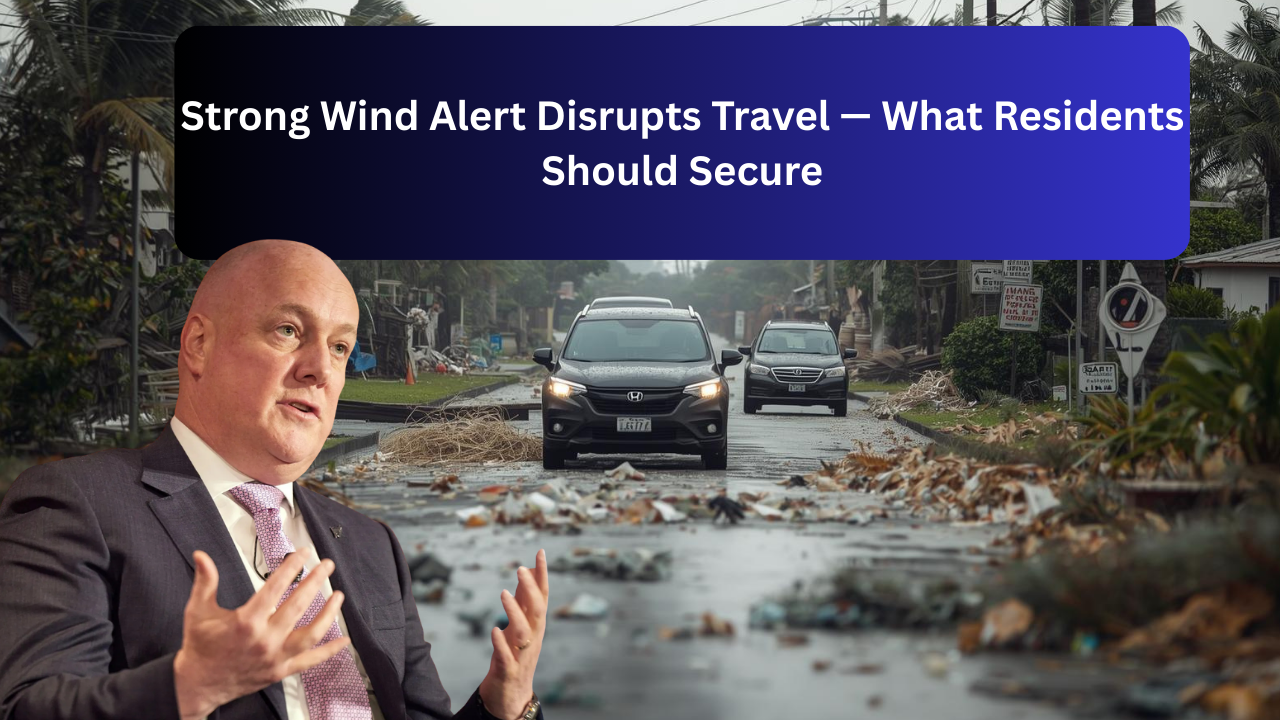
For many New Zealanders, the day began with an unexpected disruption: delayed buses, rough ferry crossings, flight warnings, and roads feeling noticeably less forgiving behind the wheel. A strong wind alert has swept across parts of the country, and while wind is nothing new for Kiwis, the strength and reach of these gusts have been enough to interfere with travel and daily routines.
Strong winds are often underestimated because they don’t always look dramatic. Yet they are one of the most disruptive weather events, capable of grounding transport, damaging property, and creating sudden safety risks. Authorities are urging residents not only to rethink travel plans, but also to secure loose items before conditions worsen.
Here’s what’s happening, why wind causes so much disruption, and what residents should secure right now.

Why Strong Winds Are a Serious Disruption
Unlike rain or snow, wind affects movement and stability.
Strong gusts can:
- Push vehicles off course
- Bring down branches or power lines
- Turn unsecured objects into hazards
- Make walking and cycling dangerous
Because wind impacts so many systems at once, even moderate warnings can lead to widespread disruption.

What’s Driving the Current Wind Conditions
The current alert is linked to fast-moving pressure systems interacting across the country.
When these systems tighten, they create:
- Sustained strong winds
- Sudden, damaging gusts
- Highly variable conditions depending on location
In exposed areas, gusts can be significantly stronger than forecast averages.

Travel Disruptions Being Reported
Transport is often the first thing affected.
Residents are experiencing:
- Ferry delays or cancellations
- Flight warnings and turbulence
- Hazardous driving conditions, especially for high-sided vehicles
- Cycling and walking routes becoming unsafe
Even short trips can become risky when gusts are unpredictable.

Why Wind Is Especially Dangerous for Drivers
Wind doesn’t just slow travel — it changes vehicle behaviour.
Drivers may notice:
- Sudden sideways movement
- Difficulty staying in lane
- Reduced control on bridges and open roads
Lighter vehicles, vans, trucks, and vehicles towing trailers are particularly vulnerable.

Public Transport and Infrastructure Impacts
Strong winds can disrupt services without warning.
Impacts may include:
- Delayed buses due to debris or safety checks
- Ferry services adjusting schedules
- Temporary closures of exposed routes
These disruptions often cascade, affecting commuters well beyond the windy period itself.

Official Warnings and Monitoring
Wind alerts and updates are being issued by MetService, which monitors gust strength, direction, and regional impacts in real time.
Officials stress that wind conditions can intensify quickly, even if rain or storms appear minimal.
Why Residents Are Being Asked to Secure Property
One of the most preventable risks during strong winds comes from loose items.

Common hazards include:
- Outdoor furniture
- Trampolines
- Rubbish bins
- Garden tools and pots
Once airborne, these objects can cause injury or damage property.
What Homeowners and Renters Should Secure First
Residents are being advised to prioritise items that can move easily.

These include:
- Chairs, tables, and umbrellas
- Potted plants
- Building materials
- Lightweight structures
Securing these items early reduces the risk of damage and injury.
Balconies and High-Rise Living Risks
People living in apartments face unique challenges.
Items on balconies can:
- Fall from height
- Become dangerous projectiles
- Damage vehicles or buildings below
Even small objects can cause serious harm when dropped by strong gusts.
Trees, Branches, and Power Risks
Strong winds often expose weaknesses in trees and infrastructure.
Residents should be alert to:
- Overhanging branches
- Loose fencing
- Power lines near trees
Power outages are more likely during wind events, especially in exposed or rural areas.
Real Experiences From Residents
A Wellington commuter said her bus was delayed after debris blocked a route. “It wasn’t raining, but the wind was enough to cause chaos.”
Another resident shared that a neighbour’s unsecured trampoline ended up several metres away. “It happened so fast.”
These situations highlight how quickly conditions can escalate.
Why Coastal and Hill Areas Are Most Affected
Geography plays a major role.
Coastal and elevated areas often experience:
- Stronger gusts
- Less shelter
- Rapid changes in wind direction
Residents in these areas are often advised to take extra precautions.
What to Do If You Must Travel
If travel can’t be avoided:
- Allow extra time
- Drive cautiously and reduce speed
- Avoid exposed routes where possible
- Be prepared for delays or detours
Checking updates before leaving can prevent unnecessary risk.
What to Do If Conditions Worsen
If winds intensify:
- Stay indoors if possible
- Avoid parking near trees
- Keep clear of exposed areas
Waiting out the worst conditions is often the safest choice.
Why Wind Alerts Are Sometimes Underestimated
Wind doesn’t always come with dramatic visuals.
Because there’s often:
- No heavy rain
- No thunder
- No visible storm clouds
People may underestimate the danger — until something goes wrong.
How Long Disruptions May Last
Wind events are often shorter than other weather systems, but their impacts can linger.
Cleanup, repairs, and transport delays may continue even after gusts ease.
Staying patient and flexible helps reduce frustration.
What This Means for the Rest of the Day
Residents should expect:
- Ongoing gusty conditions in affected regions
- Possible transport changes
- Increased risk from unsecured items
Conditions may improve gradually, but caution remains important.
What You Should Do Right Now
Simple actions make a big difference:
- Secure loose items
- Check travel updates
- Stay alert to changing conditions
- Avoid unnecessary exposure
Preparation is the most effective response.
Questions and Answers About Strong Wind Alerts
Why is wind causing so much disruption?
Because it affects travel, stability, and unsecured objects.
Are winds stronger in certain areas?
Yes, coastal and elevated areas are most exposed.
Who issues wind alerts?
MetService.
Should I cancel travel plans?
If possible, yes — especially in exposed areas.
What should I secure at home?
Outdoor furniture, bins, pots, and loose items.
Are power outages possible?
Yes, especially near trees and lines.
Is driving dangerous in strong winds?
Yes, particularly for high-sided vehicles.
How quickly can conditions change?
Very quickly — within minutes in some cases.
Are these alerts common?
Yes, but impacts vary by strength and location.
Should renters take action too?
Yes, securing balconies and outdoor areas is essential.
Will public transport be affected all day?
It depends on how long winds persist.
Is wind more dangerous than rain?
It can be, especially for travel and property damage.
What’s the safest approach today?
Secure property and avoid unnecessary travel.
What’s the main takeaway?
Strong winds don’t look dramatic — but they disrupt fast and hit hard.











Leave a Comment