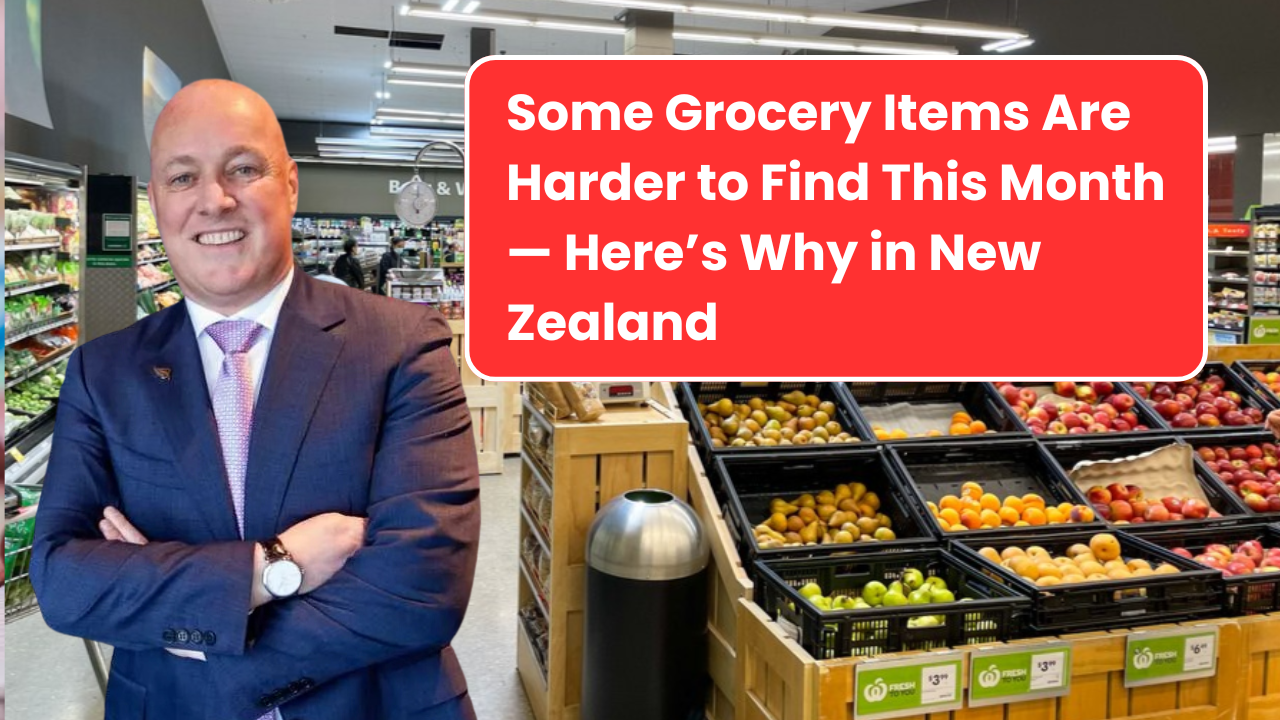
Shoppers across New Zealand are noticing something unusual in supermarkets this December: certain everyday grocery items are suddenly harder to find. Shelves that are normally full look patchy, favourite brands are missing, and shoppers are being forced to switch products or visit multiple stores. While rumours of shortages spread quickly online, officials and industry insiders say the situation is not a crisis, but the result of several December-specific pressures hitting at the same time.
From fresh produce to pantry staples, the issue is affecting households nationwide. Some shoppers report missing items for days. Others say stock appears briefly, then disappears again. The inconsistency is frustrating — especially at a time when families are already under pressure to manage holiday costs.

In Palmerston North, shopper Karen said she went to three supermarkets looking for the same item. “It wasn’t panic buying. It just wasn’t there. I ended up buying something I don’t usually use.”
In South Auckland, a father of two said the issue isn’t empty shelves everywhere — it’s specific items going missing without warning. “You assume it’ll be there because it always is. Then suddenly, it’s not.”
So what’s really happening?


This is not a nationwide food shortage
The most important thing to understand is that New Zealand is not facing a food shortage. There is no collapse in supply, no emergency rationing, and no need for panic buying.
Instead, what shoppers are seeing is:
- Temporary supply disruption
- Seasonal demand spikes
- Distribution timing issues
- Product-specific bottlenecks
Supermarkets confirm that most items remain available — just not always at the same time or in the same quantities people expect.

A grocery supply manager said,
“This isn’t about running out of food. It’s about how fast shelves can be refilled in December.”
December is the hardest month for grocery supply
December puts unique pressure on the food supply chain.
Key factors include:

- Christmas demand surges
- Public holidays reducing delivery days
- Shorter operating weeks
- Increased travel and tourism
- More people shopping at once
When demand jumps suddenly and delivery schedules tighten, even small disruptions become visible.
A logistics coordinator explained,
“In November, a delay barely shows. In December, it shows immediately.”
Public holidays disrupt deliveries
One of the biggest reasons items go missing is public holiday scheduling.

During December:
- Warehouses close on statutory holidays
- Truck movements are restricted
- Delivery windows shrink
- Restocking is delayed by days, not hours
This means that if an item sells out just before a holiday, it may not be replenished until several days later.
Shoppers often mistake this delay for a shortage, when it is actually a timing issue.

Demand spikes for very specific items
Not all grocery items are affected equally.
The items most commonly reported as hard to find include:
- Certain meats and seafood
- Seasonal baking ingredients
- Popular snack brands
- Specific milk types
- Party-size packaging
- Christmas-related foods
These products experience sharp, short-term demand spikes, which are difficult to predict perfectly.

A supermarket buyer said,
“People don’t just buy more in December — they buy differently.”
Fresh produce faces extra pressure
Fresh fruit and vegetables are particularly sensitive to December disruption.
Challenges include:

- Weather affecting harvest timing
- Increased demand for festive meals
- Shorter shelf life
- Limited ability to stockpile
Even when produce is available nationally, getting it to stores consistently can be difficult.
A produce supplier said,
“You can’t rush a crop just because Christmas is coming.”
Imported items are more vulnerable
Products that rely on imports are more likely to disappear temporarily.
Reasons include:
- Shipping delays earlier in the year
- Port congestion flow-on effects
- Customs clearance timing
- Holiday shutdowns overseas
If imported stock arrives late or misses a delivery window, shelves can stay empty longer than expected.
This is especially noticeable with:
- Specialty sauces
- Certain snacks
- Branded packaged foods
- Non-essential imports
Why some brands disappear but alternatives remain
Shoppers often notice that a specific brand is missing while similar products remain available.
This happens because:
- Brands use different suppliers
- Distribution contracts vary
- Production schedules differ
- Demand concentrates on familiar names
When demand surges, popular brands sell out first.
A retail analyst said,
“Scarcity doesn’t hit categories evenly. It hits favourites.”
Smaller stores feel it more than big supermarkets
Smaller supermarkets and local stores often feel shortages more sharply.
Reasons include:
- Smaller backroom storage
- Fewer delivery slots
- Less flexibility in ordering
- Lower priority during high demand
Larger stores may receive restocks sooner simply because of scale.
This explains why an item may be missing in one suburb but available in another.
Why supermarkets don’t just order more
Many shoppers ask why supermarkets don’t simply increase orders.
The reality is more complex.
Limits include:
- Supplier production capacity
- Storage constraints
- Waste risk after Christmas
- Transport availability
Ordering too much creates problems in January, when demand drops suddenly.
A store manager said,
“Over-ordering in December means throwing food away in January.”
Online shopping adds another layer
Online grocery shopping has changed demand patterns.
Effects include:
- Faster sell-outs of popular items
- Less visible stock levels
- Increased competition for limited items
- Click-and-collect draining shelves quickly
Items may appear available online one moment and disappear the next.
This can give the impression of chaos, even when systems are working as designed.
Panic buying makes gaps worse
Although officials say panic buying is not widespread, small bursts of fear-driven purchasing do occur.
When shoppers see:
- Empty shelves
- Social media posts
- Rumours of shortages
Some respond by buying extra, even if unnecessary.
This behaviour:
- Drains stock faster
- Creates artificial scarcity
- Reinforces the perception of shortage
Authorities urge shoppers to buy normally.
How long will this last
Most grocery supply issues ease after Christmas.
Reasons include:
- Demand returning to normal
- Delivery schedules stabilising
- Warehouses reopening fully
- Stock catching up
In most cases, missing items return within days or weeks.
A supply chain expert said,
“January is calmer. December is the storm.”
What the Government says
Officials confirm there is no food security issue.
A Government spokesperson said,
“New Zealand’s food supply remains strong. December disruptions are logistical, not structural.”
Authorities continue to monitor supply chains but do not expect widespread shortages.
What supermarkets are doing
Retailers say they are actively managing the situation.
Steps include:
- Prioritising high-demand items
- Redirecting stock between stores
- Adjusting delivery schedules
- Limiting promotional pressure
Many stores are also communicating with suppliers daily.
A supermarket representative said,
“We’re moving stock constantly. It just doesn’t always show on shelves immediately.”
How shoppers can reduce frustration
Shoppers can make December grocery shopping easier by adjusting expectations and habits.
Helpful strategies include:
- Shopping earlier in the day
- Being flexible with brands
- Checking multiple stores if needed
- Buying essentials ahead of peak days
- Avoiding last-minute shopping before holidays
Flexibility goes a long way.
Why flexibility matters more than usual
December rewards adaptability.
Being willing to:
- Substitute brands
- Adjust meal plans
- Buy seasonal alternatives
can reduce stress and save time.
A shopper in Tauranga said,
“I stopped chasing one brand and just bought what was there. It was fine.”
Seniors and vulnerable households
Some groups feel supply disruptions more acutely.
These include:
- Seniors with limited mobility
- People on fixed incomes
- Families relying on specific dietary items
Community groups say clearer communication helps these shoppers plan better.
Community food support stepping up
Community food providers report increased coordination in December.
Efforts include:
- Redistributing surplus stock
- Supporting vulnerable households
- Filling short-term gaps
These services help ensure no one goes without essentials.
What not to do
Experts warn against:
- Stockpiling excessively
- Spreading unverified rumours
- Assuming empty shelves mean long-term shortages
These actions worsen the problem.
Why this happens every year
Many shoppers forget that December supply disruption is not new.
It happens because:
- Demand surges suddenly
- Holidays compress supply schedules
- Human behaviour changes
This year feels sharper because households are watching costs more closely.
What January will look like
January usually brings relief.
Expect:
- More consistent stock
- Fuller shelves
- Fewer delivery delays
- Less pressure on popular items
The system resets quickly once holidays pass.
Key things to remember
- Some grocery items are harder to find this month
- This is due to timing and demand, not shortages
- Public holidays disrupt deliveries
- Popular brands sell out first
- Most issues resolve after Christmas
- Panic buying makes it worse
The shelves aren’t empty — they’re just catching up.

Q&A: December grocery shortages explained
- Is there a food shortage in NZ?
No. - Why are some items missing?
Holiday timing and demand. - Are supermarkets understocking?
No, supply is constrained temporarily. - Why does one store have stock and another not?
Delivery timing differs. - Are imported items more affected?
Yes. - Should I stockpile?
No. - Will prices rise?
Not generally due to this issue. - How long will this last?
Mostly until after Christmas. - Are fresh foods affected more?
Often, yes. - Are brands the issue?
Popular brands sell out first. - Is online shopping worse?
It can be during peak demand. - Are seniors at risk?
Support services are in place. - Is the Government concerned?
No major concern. - Will January be better?
Yes. - What’s the best approach?
Shop early and stay flexible.










Leave a Comment