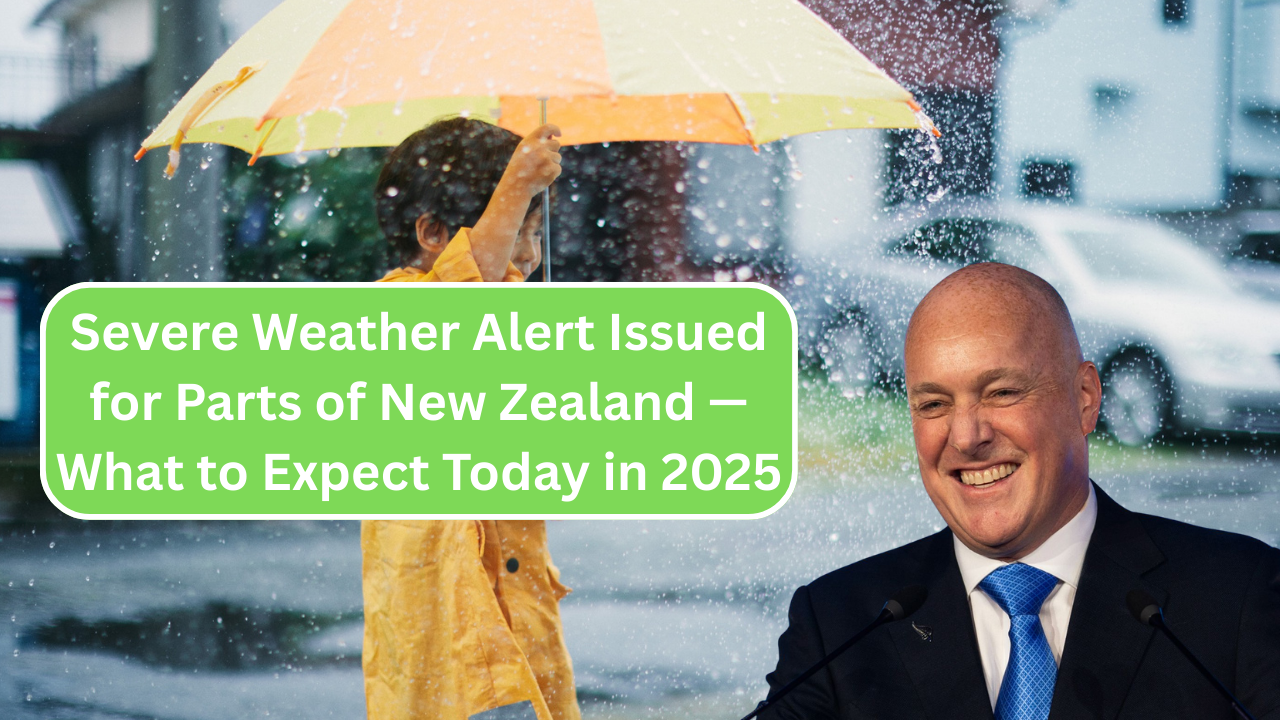
For many New Zealanders, the day began with weather warnings flashing across phones and radio bulletins interrupting regular programming. In 2025, a severe weather alert has been issued for several parts of the country, with forecasters warning that conditions could deteriorate quickly and disrupt travel, power supply, and daily routines.
While severe weather is not unusual in New Zealand, the combination of heavy rain, strong winds, and rapidly changing conditions has prompted authorities to urge people to stay informed and prepared. For households already under pressure, even short disruptions can have serious consequences.
Here’s what is expected today, which areas are affected, and what residents should do right now.


Why This Weather Alert Matters
Severe weather warnings are issued only when conditions pose a genuine risk.
This alert matters because:
- Heavy rainfall can cause flooding and slips
- Strong winds increase the risk of power outages
- Travel conditions may become dangerous quickly
- Emergency services may be stretched
- Vulnerable households face higher risk
Authorities stress that preparation now can prevent emergencies later.

What’s Changing / What’s New Today
This weather system has intensified faster than initially forecast.
Key developments include:
- Heavier rainfall totals than earlier models predicted
- Stronger gusts in exposed and coastal areas
- Increased risk of surface flooding
- Potential disruption to transport networks
- Elevated risk for already saturated ground
Conditions may vary significantly even within short distances.

Which Areas Are Most Affected
While impacts can shift, current alerts focus on several regions.
Areas under heightened watch include:
- Parts of the upper North Island
- Central and western regions prone to flooding
- Coastal and elevated areas exposed to strong winds
- Communities near rivers and streams
Residents are advised to monitor updates closely throughout the day.

What Type of Weather Is Expected
The alert covers multiple weather hazards.
Forecast impacts include:
- Periods of heavy rain
- Strong to damaging wind gusts
- Reduced visibility
- Possible thunderstorms in some areas
- Localised flooding
Even brief intense bursts can cause disruption.


Flooding and Slip Risks Explained
Ground conditions play a major role in risk.
Concerns include:
- Surface flooding on roads
- Overflowing drains and streams
- Slips on steep or unstable terrain
- Water entering low-lying homes
People living near hillsides or waterways should be particularly cautious.

Impact on Roads and Travel
Travel disruption is one of the most immediate risks.
Drivers may face:
- Flooded roads
- Debris or fallen trees
- Reduced visibility
- Sudden road closures
Authorities advise avoiding non-essential travel where possible.

Public Transport and School Disruptions
Severe weather often affects daily schedules.
Possible impacts include:
- Delays or cancellations to bus and train services
- Ferry disruptions in coastal areas
- School closures or early dismissals
- Remote learning plans being activated
Families should check local updates before heading out.

Power Outages and Utilities
Strong winds increase the likelihood of outages.
Households may experience:
- Temporary power cuts
- Internet and phone disruptions
- Water supply issues in some areas
Residents are advised to prepare for short-term outages.
Real Stories From Past Weather Events
In previous severe weather events, many people were caught off guard.
In Hawke’s Bay, resident Maria recalls, “The rain intensified so fast. Roads were flooded within an hour.”
In Northland, pensioner James says power loss was the hardest part. “It wasn’t the storm — it was the cold night without heating.”
These experiences underline why preparation matters.
Advice for Households Right Now
Authorities recommend taking simple precautions.
Steps include:
- Securing loose outdoor items
- Charging phones and devices
- Avoiding flood-prone routes
- Keeping emergency supplies accessible
- Checking on neighbours if safe to do so
Small actions can significantly reduce risk.
Advice for Drivers
Driving conditions can change rapidly.
Drivers should:
- Slow down
- Avoid flooded roads
- Increase following distances
- Watch for debris
- Turn around if conditions worsen
No trip is worth the risk during severe weather.
Support for Vulnerable People
Severe weather affects some people more than others.
Extra care should be taken for:
- Seniors
- People with disabilities
- Those relying on medical equipment
- Families with young children
Community support can be critical during outages or isolation.
What Emergency Services Are Saying
Emergency agencies are on standby.
A spokesperson said, “We urge people to take warnings seriously. Conditions can change quickly, and early decisions save lives.”
Emergency services ask the public to avoid unnecessary calls unless urgent help is needed.
How Long the Weather Is Expected to Last
While conditions may ease later, uncertainty remains.
Forecast guidance suggests:
- Peak impacts today
- Possible lingering effects into the evening
- Localised issues continuing after rain stops
Damage assessment may take time once conditions improve.

What You Should Know Right Now
As of today:
- Severe weather alerts are active
- Conditions may worsen quickly
- Travel disruption is likely
- Power outages are possible
- Staying informed is essential
Ignoring warnings increases risk.
Where to Get Updates
Residents should rely on official sources.
Recommended options include:
- Local radio updates
- Council and emergency notifications
- School and transport alerts
- Community group messages
Avoid relying on rumours or unverified social media posts.
Q&A: Severe Weather Alert in NZ
1. Is this a serious weather event?
Yes, enough to trigger official alerts.
2. Should I stay home if possible?
Yes, if travel is not essential.
3. Are schools affected?
Some may be — check local updates.
4. Could power go out?
Yes, especially in windy areas.
5. Are floods expected everywhere?
No, impacts are localised.
6. Is it safe to drive?
Only if necessary and with caution.
7. How fast can conditions change?
Very quickly.
8. Should I prepare emergency supplies?
Yes.
9. Are emergency services prepared?
Yes.
10. Will public transport run normally?
Possibly not.
11. Are coastal areas at higher risk?
Often, yes.
12. Should I check on neighbours?
If safe to do so.
13. How long will alerts last?
Until conditions ease.
14. Is this unusual for NZ?
Severe weather occurs regularly, but impacts vary.
15. What’s the best action right now?
Stay informed and cautious.











Leave a Comment