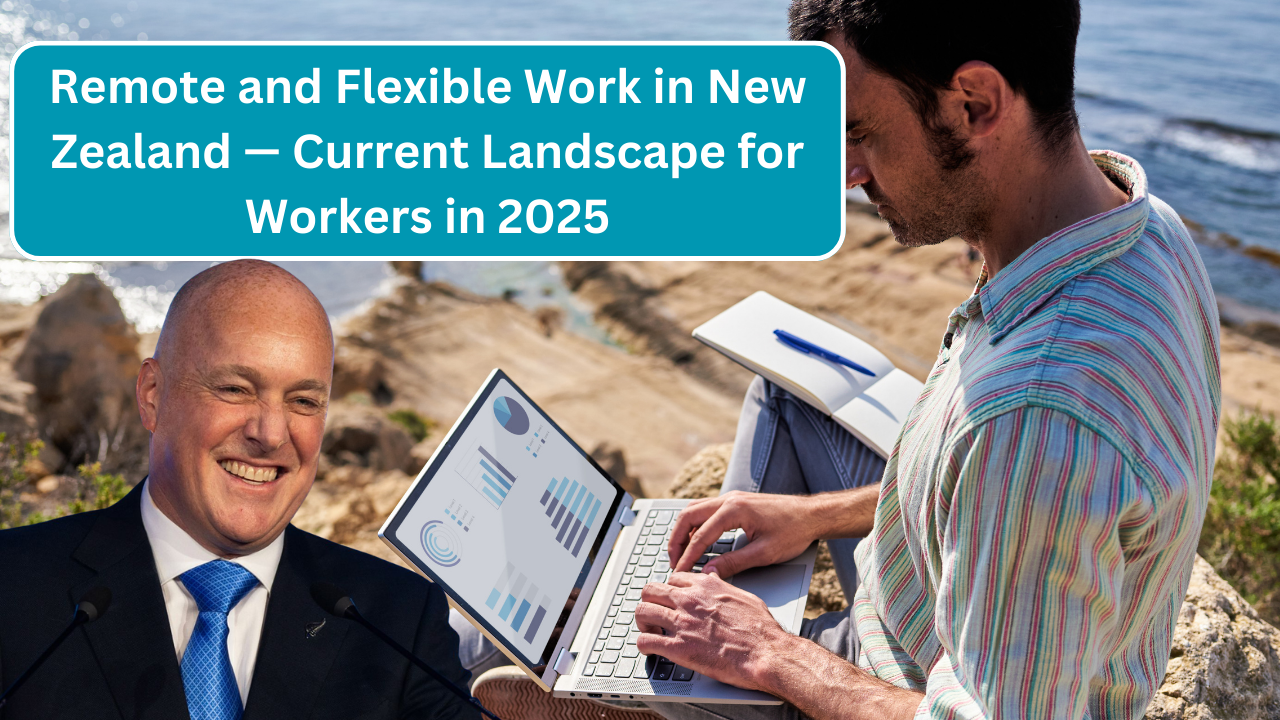
For many New Zealanders, the way work fits into daily life has changed permanently. In 2025, remote and flexible work is no longer a temporary arrangement or a crisis response — it is a defining feature of the modern labour market. Yet while flexibility is more common than ever, access to it remains uneven, and expectations between employers and workers continue to evolve.
For households facing cost-of-living pressures, flexible work is not just about comfort or convenience. It can determine whether people stay employed, manage childcare or caring responsibilities, and cope with rising transport and housing costs. Understanding how flexible work actually looks in New Zealand right now is essential for workers planning their next steps.

Why Flexible Work Still Matters in 2025
Flexible work has moved from being a “nice-to-have” to a practical necessity for many households.

It matters because it:
- Reduces commuting and fuel costs
- Helps parents manage childcare schedules
- Supports carers and people with health conditions
- Improves workforce participation
- Allows access to jobs outside local regions
For some workers, flexibility is the difference between working and not working at all.
What’s Changing / What’s New This Year
In 2025, the focus has shifted from expansion to consolidation.

Key developments include:
- Hybrid work becoming the dominant model
- Employers setting clearer in-office expectations
- Formal flexible work policies replacing ad hoc arrangements
- Greater monitoring of productivity and performance
- Continued debate about fairness across roles
Rather than pulling back completely, most employers are refining how flexibility works.
Remote Work vs Flexible Work: Understanding the Difference
These terms are often used interchangeably but mean different things.

- Remote work refers to working away from a central office, often from home
- Flexible work refers to when, where, or how work is done, including hours and schedules
Many jobs are flexible without being fully remote.
Who Has Access to Flexible Work in NZ
Access to flexibility varies widely by sector.
Workers most likely to have flexible options include:

- Office-based professionals
- Technology and digital roles
- Administrative and advisory positions
- Knowledge and services industries
Workers least likely include:
- Retail and hospitality staff
- Healthcare and frontline workers
- Construction and manufacturing employees
- Transport and logistics workers
This divide has raised equity concerns across the labour market.

Real Stories From New Zealand Workers
In Wellington, policy advisor Hana says hybrid work keeps her employed. “Without flexibility, I’d have to cut my hours because of childcare.”

In Southland, call-centre worker Reuben works fully remotely. “I’m employed by a company in Auckland. That job wouldn’t exist locally.”
These examples show how flexibility expands opportunity — but unevenly.
Employer Attitudes Toward Flexible Work
Employers in 2025 are balancing flexibility with operational needs.

Common employer concerns include:
- Maintaining team collaboration
- Preserving workplace culture
- Ensuring accountability and output
- Fairness between flexible and non-flexible roles
- Data security and privacy
Many organisations now require minimum in-office days.
Productivity and Performance Debates
The question of productivity remains central.

Evidence suggests:
- Many workers are as productive or more productive remotely
- Productivity varies significantly by role and individual
- Clear expectations improve outcomes
- Burnout risk can increase without boundaries
Performance is increasingly measured by outcomes rather than hours worked.
Flexible Work and Cost-of-Living Pressures
For households, flexibility has real financial benefits.

Potential savings include:
- Reduced fuel and public transport costs
- Lower childcare expenses
- Fewer meals purchased outside the home
- Reduced clothing and incidental work costs
For some families, flexible work effectively increases real income.
Parents and Carers Benefit Most
Parents and carers are among the strongest advocates for flexible work.
Benefits include:
- Easier school and childcare coordination
- Reduced stress from rigid schedules
- Greater workforce retention
- Improved gender equity in employment
Without flexibility, many carers reduce hours or leave work altogether.
Older Workers and Flexible Transitions
Flexible work also supports older workers.
Key advantages include:
- Gradual transition toward retirement
- Managing health conditions
- Retaining experience within organisations
- Reducing physical and mental strain
This supports workforce participation as the population ages.
Legal Rights to Flexible Work in New Zealand
New Zealand law provides employees with a right to request flexible work.
Key points include:
- All employees can request flexible arrangements
- Requests must be considered seriously
- Employers can refuse only on reasonable grounds
- Requests can cover hours, days, or location
Understanding this right empowers workers to start conversations.
Challenges and Downsides of Flexible Work
Flexible work is not without drawbacks.
Common challenges include:
- Isolation and reduced social connection
- Blurred boundaries between work and home
- Increased household utility costs
- Concerns about visibility and career progression
- Unequal access across job types
Successful flexible work requires intentional management.
Regional and Rural Impacts
Remote work has changed where people can live.
Positive impacts include:
- Increased employment opportunities in regional areas
- Reduced pressure on major cities
- More balanced regional economies
However, not all industries can decentralise.
What You Should Know Right Now
As of 2025:
- Flexible work remains widespread
- Hybrid models dominate
- Access depends heavily on role and industry
- Legal rights to request flexibility remain
- Cost-of-living pressures reinforce demand
Flexible work is now a permanent labour market feature.
How Workers Can Navigate Flexible Work
Practical strategies include:
- Understanding your legal rights
- Making clear, well-reasoned requests
- Focusing on outputs rather than hours
- Setting firm boundaries at home
- Staying informed about workplace policies
Clear communication improves outcomes for both workers and employers.

Q&A: Remote and Flexible Work in NZ
1. Is remote work still common in 2025?
Yes, especially in hybrid form.
2. Do all workers have access to flexibility?
No, it depends on the role.
3. Can I request flexible work?
Yes, all employees can request it.
4. Can employers refuse?
Yes, but only on reasonable grounds.
5. Is flexible work only about location?
No, it includes hours and schedules.
6. Does flexible work save money?
For many households, yes.
7. Are employers reducing flexibility?
Some are tightening policies.
8. Does remote work affect promotions?
It can, depending on workplace culture.
9. Is productivity lower remotely?
Not necessarily.
10. Are home office costs covered?
Usually not.
11. Do carers benefit most?
Yes.
12. Is flexible work protected by law?
The right to request is protected.
13. Will flexible work expand further?
Growth has slowed but it is embedded.
14. Does remote work help regional NZ?
Yes, for certain sectors.
15. What’s the biggest challenge?
Balancing flexibility with fairness.











Leave a Comment