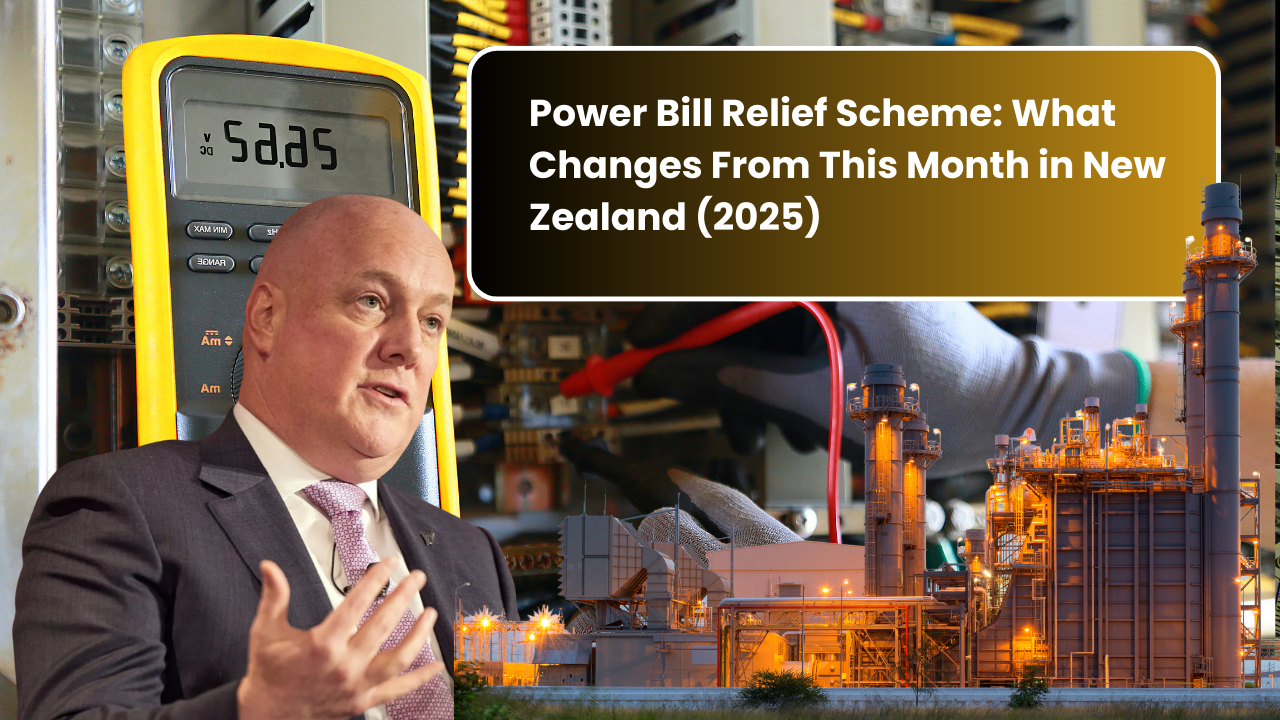
As winter pressures ease into spring and summer, many New Zealand households expect their power bills to fall. Yet in 2025, electricity costs remain a major concern, especially for seniors, low-income families, and people with health conditions that require heating or medical equipment year-round. For some households, power bills are still the most unpredictable expense in the budget.
That is why renewed attention on the Power Bill Relief Scheme — and what is changing from this month — has captured widespread interest. While the scheme itself continues, adjustments in delivery, eligibility focus, and seasonal support mean households need to understand exactly what help is available right now.
Here is a clear, detailed look at how power bill relief works in New Zealand in 2025, what has changed this month, and what households should do to avoid missing out.


Why Power Bills Remain a Pressure Point in 2025
Even as wholesale electricity markets stabilise, household power bills remain high for many reasons.
Key contributors include:
- Higher fixed daily charges
- Increased network and infrastructure costs
- Regional price differences
- Greater electricity use due to remote work and home-based care
- Medical and accessibility-related energy needs
For households on tight budgets, power is not optional. It cannot be delayed, reduced to zero, or replaced.
What’s New From This Month
From this month, the focus of power bill relief has shifted slightly rather than expanded.
Key updates include:
- Continued delivery of targeted energy assistance rather than universal relief
- Stronger alignment with income-based support
- Increased monitoring of households with high energy needs
- Seasonal transition away from winter-focused messaging
- Ongoing coordination between government support and energy providers
No new nationwide rebate has been announced, but existing relief remains active and accessible.

How the Power Bill Relief Scheme Works
Power bill relief in New Zealand is not delivered as a single programme. Instead, it operates through a combination of supports.
Core components include:
- Winter Energy Payment
- Temporary Additional Support
- Hardship assistance for urgent bills
- Energy-related components of income support
- Community and provider-level assistance
These supports work together rather than replacing each other.

Winter Energy Payment: Still Relevant
Although winter is ending, the Winter Energy Payment remains a major part of the relief framework.
Important points include:
- Paid automatically to eligible recipients
- Designed to help with higher seasonal power use
- Continues through the winter payment period
- Does not require application
For many households, it remains the most predictable form of energy support.
Who Qualifies for Ongoing Power Support
Eligibility for energy-related assistance is generally income-based.
Groups most likely to qualify include:
- NZ Super recipients
- Main benefit recipients
- Low-income working families
- People with disabilities or chronic health conditions
- Households with medically dependent electricity needs
Support levels vary depending on circumstances.

Real Stories From Households Managing Power Costs
In Invercargill, pensioner Jean says power bills worry her year-round. “Even when it’s warmer, prices don’t drop like they used to.”
In Manukau, father of three Daniel explains how support helps. “Without the extra help, we’d be behind on power every month.”
These stories reflect how energy costs affect both heating and everyday electricity use.
Government Position on Energy Affordability
Officials continue to stress that power affordability is a key cost-of-living issue.
A spokesperson involved in social policy said, “Energy support is targeted to households most at risk of hardship, especially those with fixed or low incomes.”
The government has signalled that relief is designed to prevent disconnections and hardship rather than fully offset bills.

Expert Analysis: Why Power Bills Stay High
Energy analysts note that household bills are influenced by long-term factors.
Key insights include:
- Infrastructure upgrades increase network costs
- Fixed daily charges reduce flexibility
- Climate-related demand fluctuations
- Regional generation and distribution differences
Energy economist Dr. Laura McKenzie explains, “Even when usage falls, fixed costs keep bills elevated.”
Medically Dependent Power Support
Households with medical reliance on electricity receive special consideration.
Key features include:
- Priority support during outages
- Eligibility for additional assistance
- Recognition of unavoidable power use
- Stronger hardship protections
This group is a focus of ongoing energy policy.
Power Bill Hardship Assistance
For households facing immediate difficulty, hardship assistance remains available.
This may include:
- One-off payments for overdue bills
- Emergency grants
- Payment plans coordinated with providers
- Referrals to budgeting services
Early contact improves outcomes and reduces disconnection risk.
How Energy Providers Fit Into the Scheme
Retailers play a role alongside government support.
Common provider-level supports include:
- Flexible payment plans
- Temporary bill deferrals
- Customer hardship programmes
- Energy efficiency advice
Government relief works best when combined with provider cooperation.
Why Support Is Targeted Rather Than Universal
Policy experts generally support targeted relief.
Reasons include:
- Lower fiscal cost
- Better reach to vulnerable households
- Reduced inflationary impact
- Avoiding benefits flowing to high-income users
Targeting ensures support goes where it is most needed.
Seasonal Shifts and What to Expect Next
As the year progresses:
- Winter-specific payments will end on schedule
- General energy support remains available
- Summer power costs may still rise due to cooling needs
- Reviews may inform future adjustments
Energy affordability remains under ongoing review.
What You Should Know Right Now
As of this month:
- No new universal power rebate has been introduced
- Existing energy support remains active
- Eligibility is income-based
- Medical needs receive special consideration
- Early action prevents escalation
Households should not assume support has ended just because winter is easing.
Steps Households Can Take Today
To manage power costs:
- Check eligibility for energy-related support
- Keep income details up to date
- Contact providers early if struggling
- Avoid ignoring overdue bills
- Seek advice if circumstances change
Small steps can prevent larger problems.

Q&A: Power Bill Relief in New Zealand
1. Has the power bill relief scheme ended?
No, support remains in place.
2. Is there a new rebate this month?
No new nationwide rebate has been announced.
3. Who qualifies for energy support?
Low-income and vulnerable households.
4. Do I need to apply for winter payments?
No, they are automatic.
5. Can working families get help?
Yes, depending on income.
6. Are seniors eligible?
Yes, many seniors receive support.
7. What if my power bill is overdue?
Contact support services immediately.
8. Are medical households prioritised?
Yes.
9. Will support stop after winter?
Some payments end, others continue.
10. Does provider help replace government support?
No, they work together.
11. Can power be disconnected if I get support?
Support reduces but does not eliminate risk.
12. Are rural households treated differently?
Eligibility rules are the same.
13. Will power prices fall soon?
No clear indication of major drops.
14. Can support be backdated?
Sometimes, depending on circumstances.
15. Where should households start?
By checking eligibility for energy assistance.








Leave a Comment