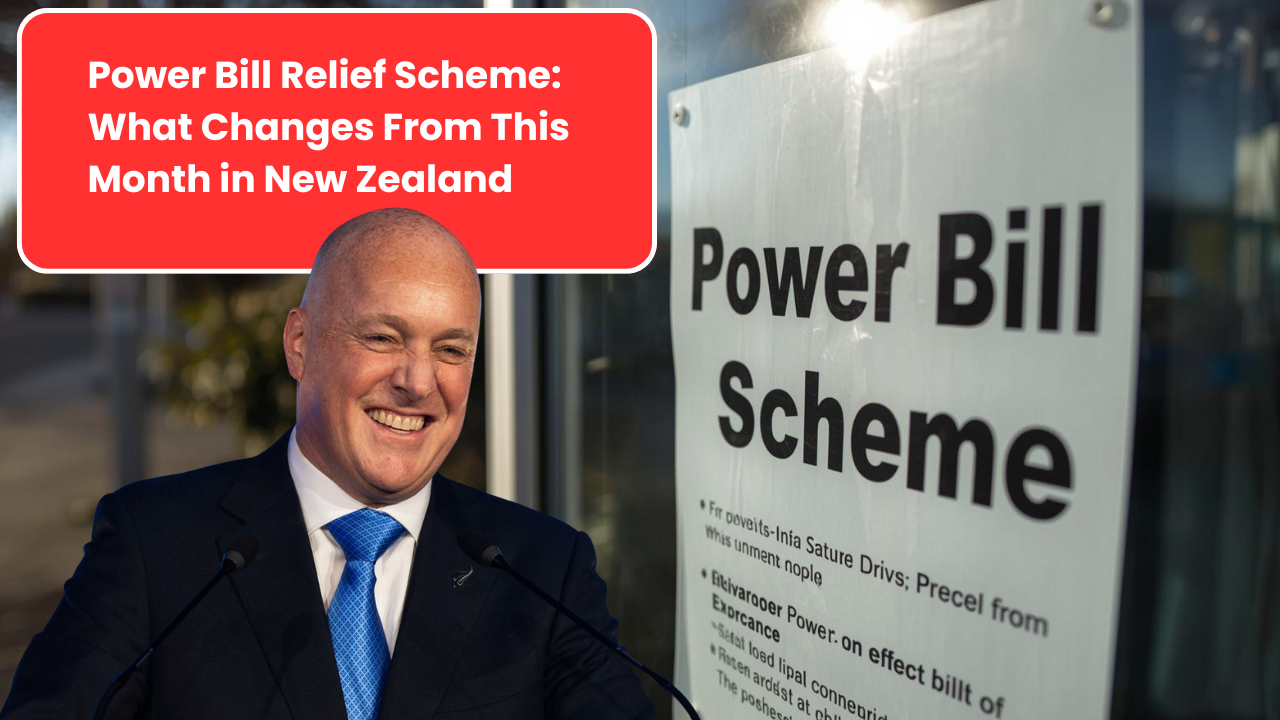
As temperatures fluctuate and energy use shifts through the year, power bills remain one of the most unpredictable expenses for New Zealand households. For many families, seniors, and low-income earners, opening an electricity bill can still bring anxiety, even after recent easing in inflation.
This month, renewed attention has turned to New Zealand’s power bill relief measures, with households asking a simple question: what support is available right now, and what has changed? While no sweeping new nationwide subsidy has been announced, several important adjustments, reviews, and eligibility clarifications are now in effect or under active consideration.
Understanding how power bill relief works — and what households should expect from this month onward — is critical for managing costs through the rest of 2025.


Why Power Bills Remain a Key Cost-of-Living Issue
Electricity is not a discretionary expense. It powers heating, cooling, cooking, medical devices, and basic daily life. For vulnerable households, even modest increases can force difficult trade-offs between warmth, food, and healthcare.
Recent household surveys indicate:
- Power bills remain among the top three household expenses
- Low-income households spend a higher proportion of income on energy
- Seniors and renters are more exposed to price volatility
- Seasonal spikes still catch many households off guard
Although wholesale electricity prices have stabilised compared with previous years, retail costs continue to vary significantly by region and provider.
What’s Changing / What’s New From This Month
From this month, several important developments affect how power bill relief operates:
- Ongoing review of targeted electricity support schemes
- Clarification of eligibility for existing assistance programmes
- Greater emphasis on automatic support rather than applications
- Continued funding for energy-related supplements
- Stronger focus on households most at risk of energy hardship
These changes are not a single new scheme but rather a tightening and refocusing of how relief is delivered.
Existing Power Bill Support Still in Place
While headlines often focus on new announcements, several key support mechanisms are already active and remain available.

Current forms of power-related assistance include:
- Winter Energy Payment (seasonal support)
- Temporary Additional Support for hardship cases
- Accommodation-related assistance that offsets utility costs
- Provider-level hardship programmes and payment plans
- Community-based energy grants in some regions
For many households, support comes through a combination of these measures rather than one payment.
Winter Energy Payment and Ongoing Effects
Although the Winter Energy Payment runs during colder months, its impact often extends beyond winter.

Many recipients use winter assistance to:
- Catch up on arrears
- Smooth out annual energy costs
- Avoid disconnection risks
- Maintain safe indoor temperatures
Officials note that lessons from winter usage patterns now inform broader energy support planning for the rest of the year.
Who Is Most Affected by the Latest Adjustments
The current focus is firmly on households facing energy hardship.

Priority groups include:
- Seniors on NZ Super with limited savings
- Benefit recipients
- Families with young children
- People with health conditions requiring consistent heating or cooling
- Renters with limited control over insulation or energy efficiency
Targeting support to these groups is intended to ensure assistance reaches those most exposed to power cost stress.
Real Stories From Households Managing Power Costs
In Invercargill, pensioner Joyce says power bills remain her biggest worry. “I don’t run the heater much anymore. Even with support, the bill still surprises me.”

In West Auckland, young parent Daniel explains how energy costs affect family budgeting. “When the power bill goes up, something else has to give. Usually food.”
These lived experiences continue to shape how relief policies are designed and adjusted.
Government Position on Power Bill Relief
Government officials have acknowledged that energy affordability remains unresolved for many households.

A spokesperson involved in the policy review said, “Our focus is on reducing energy hardship, not just temporary bill relief. That means targeting support and encouraging sustainable solutions.”
Officials have also stressed that relief measures must complement long-term energy efficiency improvements rather than replace them.

Why Targeted Relief Is Being Prioritised
Energy economists argue that broad subsidies are expensive and often benefit households that do not need assistance.
Key expert insights include:
- Targeted relief is more cost-effective
- Vulnerable households gain the most benefit per dollar spent
- Automatic support reduces administrative barriers
- Energy hardship requires both financial and structural solutions
Policy analyst Maria Thompson notes, “Helping households manage bills today must go hand-in-hand with reducing future energy demand.”
How Power Bill Relief Is Delivered
Relief typically reaches households in several ways:
- Direct payments through existing benefit systems
- Supplements added to regular support payments
- Credits applied indirectly through budgeting assistance
- Hardship grants managed by providers or community groups
Importantly, many households already receive support without realising it is classified as energy assistance.
What This Means for Seniors
For seniors, power bills are closely linked to health and wellbeing.
Concerns commonly raised include:
- Maintaining safe indoor temperatures
- Managing medical equipment energy use
- Budgeting on fixed incomes
- Avoiding disconnections
Targeted relief for seniors is designed to reduce the risk of under-heating and related health issues.
Renters and Power Costs
Renters face unique challenges when it comes to energy affordability.
Common issues include:
- Poor insulation
- Inefficient heating systems
- Limited ability to make energy upgrades
- Higher long-term costs
While relief payments help with immediate bills, policy discussions increasingly focus on improving rental energy standards.
What You Should Know Right Now
As of this month:
- No new universal power subsidy has launched
- Existing assistance remains available
- Eligibility checks are ongoing
- Support is increasingly targeted
- Automatic delivery is preferred over applications
Households already receiving support should continue to receive it without interruption.
Steps Households Can Take
To make the most of available support:
- Review current assistance you already receive
- Monitor power usage and billing cycles
- Contact providers early if struggling
- Seek budgeting or community advice if bills become unmanageable
Early action often prevents larger problems later.

Q&A: Power Bill Relief in New Zealand
1. Is there a new power bill relief payment this month?
No new universal payment has been announced.
2. Is existing support ending?
No, current assistance continues.
3. Who qualifies for power bill help?
Low-income households, seniors, and beneficiaries.
4. Do I need to apply for new relief?
Most support is automatic.
5. Are renters eligible?
Yes, if income criteria are met.
6. Does this affect the Winter Energy Payment?
No, it operates separately.
7. Will power prices go down?
Prices vary by provider and region.
8. Can power companies offer help?
Yes, many have hardship programmes.
9. Are medical needs considered?
Yes, in hardship assessments.
10. Will there be more help in winter?
Seasonal support is reviewed annually.
11. Does this reduce future bills?
It helps short-term affordability.
12. Can seniors get extra support?
Yes, through existing supplements.
13. What if I miss a payment?
Contact your provider immediately.
14. Are disconnections still happening?
Yes, but protections apply to vulnerable households.
15. Should households expect changes later in 2025?
Possibly, depending on policy reviews.









Leave a Comment