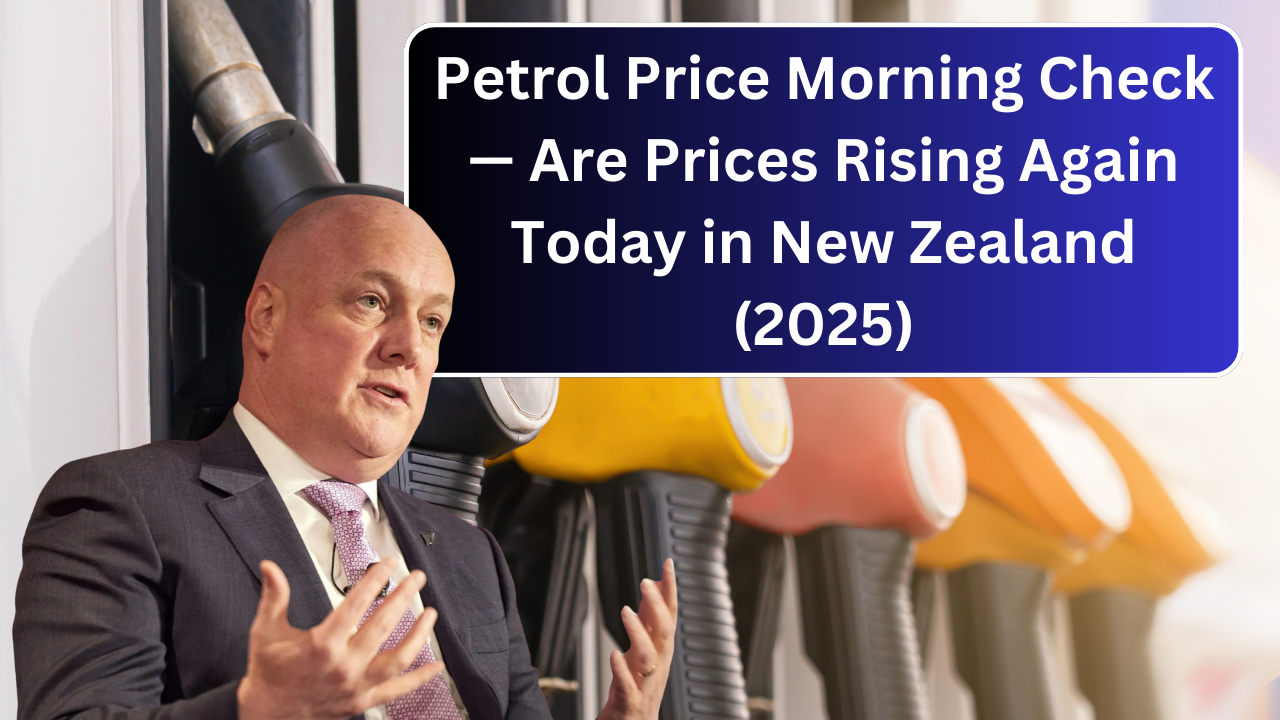
For many New Zealanders, the day starts with a familiar routine: checking the weather, scanning the news, and taking a quick look at petrol prices. In 2025, fuel costs remain one of the most closely watched household expenses, especially for commuters, families in regional areas, and small businesses that rely on vehicles to operate.
This morning’s petrol price checks have once again raised a common question: are fuel prices rising again today, or are they holding steady? While petrol prices can change daily — and even hourly — the bigger picture matters just as much as the number on the pump.
Here is a clear breakdown of what is happening with petrol prices today, why they move the way they do, and what households should realistically expect in the coming weeks.


Why Petrol Prices Still Matter So Much in 2025
Even as electric vehicles become more visible, petrol remains essential for a large share of households. For many people, fuel is not discretionary spending — it is unavoidable.
Petrol prices affect:
- Daily commuting costs
- Grocery and food prices through transport
- Childcare and school travel
- Medical appointments and essential services
- Operating costs for tradespeople and small businesses
When fuel prices rise, the impact is felt far beyond the petrol station.

What’s Changing / What’s New With Petrol Prices Today
As of this morning, petrol prices across New Zealand are showing mixed movement rather than sharp increases.
Current patterns include:
- Small increases in some urban areas
- Stable pricing in many suburbs
- Slower changes in regional centres
- Discount cycles influencing day-to-day prices
- Competition between retailers affecting local prices
There is no nationwide surge today, but volatility remains.

Why Petrol Prices Change So Frequently
Petrol pricing is influenced by a combination of global and local factors.
Key drivers include:
- Global oil prices
- The New Zealand dollar exchange rate
- Shipping and refining costs
- Local fuel taxes and levies
- Retail competition and discounting
Even when global oil prices stabilise, local prices can still fluctuate due to currency movements and supply timing.

Global Factors Affecting Prices Right Now
International markets play a major role in what New Zealanders pay.
Current global influences include:
- Oil production levels set by major exporters
- Geopolitical tensions affecting supply routes
- Global demand patterns
- Refining capacity constraints
New Zealand, as a fuel importer, is particularly exposed to these forces.

Why Regional Prices Differ So Much
It is common for drivers to notice significant price differences between regions.
Reasons include:
- Distance from ports
- Transport and storage costs
- Level of competition between retailers
- Population density
- Local operating expenses
Rural and regional areas often face higher baseline prices due to reduced competition.

Real Stories From Drivers Checking Prices Today
In Hamilton, office worker Priya says fuel costs shape her week. “If petrol jumps, I delay non-essential trips.”
In Central Otago, builder Tom explains the regional impact. “There’s no choice but to drive. Every increase goes straight into my costs.”
These experiences show how petrol prices influence daily decision-making.

Government Position on Fuel Prices
Government officials have repeatedly noted that petrol prices are largely driven by global markets.
A transport policy spokesperson said, “Fuel prices are influenced primarily by international conditions. The government continues to monitor affordability and competition.”
While fuel taxes are reviewed periodically, no immediate changes have been announced.

Expert Analysis: Are Prices Rising Again?
Energy analysts caution against reading too much into single-day movements.
Key expert insights include:
- Short-term fluctuations are normal
- Weekly and monthly trends matter more than daily changes
- Exchange rate movements can offset oil price changes
- Retail competition can delay or soften increases
Energy economist Mark Reynolds explains, “Daily price movements are noise. The trend tells the real story.”
Typical Daily Price Patterns
Many drivers notice predictable patterns.
Common trends include:
- Higher prices early in the week
- Discounting mid-week
- Temporary drops during promotions
- Gradual increases after discount cycles end
Timing your fill-up can still make a difference.
Impact on Low-Income and Regional Households
Fuel price increases disproportionately affect:
- Low-income workers with long commutes
- Rural households without public transport
- Families managing multiple school and work trips
- Small businesses with thin margins
For these groups, petrol is a necessity, not a convenience.

How Petrol Prices Feed Into the Cost of Living
Fuel prices influence inflation indirectly.
They affect:
- Food prices through transport costs
- Delivery and service fees
- Construction and trade costs
- Tourism and regional travel
This is why petrol prices are closely watched by policymakers.
Are Discounts and Apps Still Worth Using?
Many drivers use tools to manage fuel costs.
Popular strategies include:
- Monitoring fuel price apps
- Using loyalty programmes
- Filling up during discount periods
- Avoiding peak pricing days
While savings are modest, they add up over time.
Electric Vehicles and Petrol Demand
EV uptake is increasing, but petrol remains dominant.
Current realities include:
- Most vehicles on the road still use petrol
- EV adoption is uneven across regions
- Upfront costs remain a barrier for many households
- Petrol demand is declining slowly rather than sharply
Petrol prices will remain relevant for years to come.
What You Should Know Right Now
As of today:
- No nationwide petrol price spike is occurring
- Prices are fluctuating locally
- Global factors remain the main influence
- Regional variation is significant
- Volatility is likely to continue
Households should plan for ongoing price movement rather than stability.
Practical Tips for Managing Fuel Costs
Drivers can reduce impact by:
- Combining trips
- Using off-peak travel where possible
- Maintaining vehicle efficiency
- Comparing prices locally
- Budgeting for fuel volatility
Small adjustments can ease weekly pressure.

Q&A: Petrol Prices in New Zealand
1. Are petrol prices rising today?
Some areas show small increases, others are stable.
2. Why do prices change daily?
Due to global markets and retail pricing.
3. Are fuel taxes increasing?
No changes have been announced.
4. Why is petrol more expensive in rural areas?
Higher transport costs and less competition.
5. Do global oil prices affect NZ immediately?
There is usually a short delay.
6. Can prices drop suddenly?
Yes, during discount cycles.
7. Are EVs lowering petrol prices?
Only gradually.
8. Is it cheaper to fill up mid-week?
Often, but not always.
9. Do petrol prices affect food costs?
Yes, indirectly.
10. Will prices fall soon?
There is no clear indication.
11. Are discounts real savings?
Yes, for regular drivers.
12. Does the exchange rate matter?
Yes, significantly.
13. Are prices higher than last year?
In many regions, yes.
14. Can the government cap prices?
Not directly.
15. What should drivers expect next?
Continued volatility.











Leave a Comment