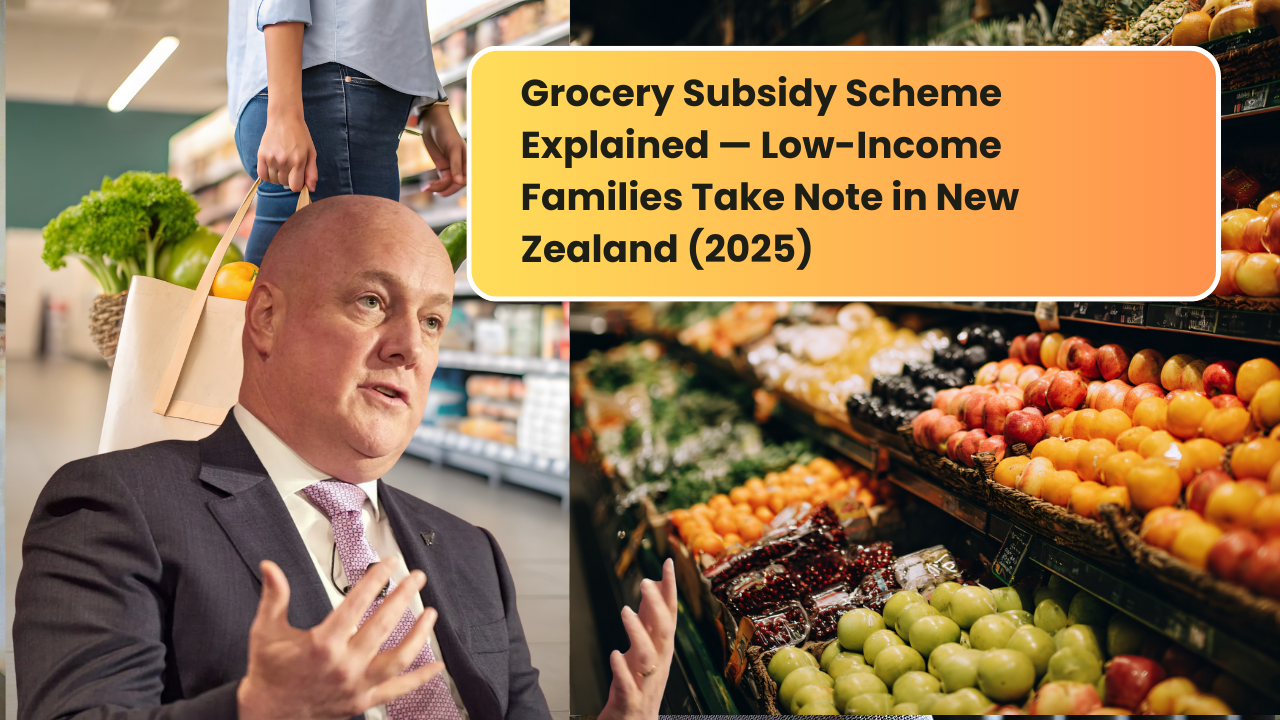
For many New Zealand families, the weekly grocery shop has become one of the most stressful parts of household budgeting. Prices for basic items — bread, milk, fresh produce, and meat — remain stubbornly high in 2025, and for low-income households, there is little flexibility left to cut back without affecting health or nutrition.
This ongoing pressure has brought renewed attention to the grocery subsidy scheme, a form of targeted support designed to help families afford essential food. While it is not a single cash payment or supermarket voucher programme, grocery assistance operates through a combination of income support, hardship grants, and targeted credits.
Understanding how this support works — and who can access it — is essential for families struggling to keep food on the table.


Why Grocery Costs Are a Major Issue in 2025
Food inflation has slowed, but prices have not returned to earlier levels. For families already under financial strain, grocery costs absorb a large share of weekly income.
Key drivers include:
- Higher wholesale food prices
- Transport and fuel costs
- Seasonal price fluctuations
- Limited competition in some regions
- Increased demand for convenience foods
For low-income households, groceries are one of the few expenses that cannot be delayed.
What’s Changing / What’s New With Grocery Support
There has been no announcement of a universal grocery voucher or supermarket subsidy in 2025. However, grocery support continues through targeted assistance, with adjustments in focus rather than structure.
Current developments include:
- Continued use of hardship-based food assistance
- Greater emphasis on families with children
- Faster access to emergency grocery support
- Coordination with budgeting and community services
- Ongoing review of food affordability pressures
Support remains targeted rather than universal.

How the Grocery Subsidy Scheme Actually Works
The grocery subsidy is not a single programme but a collection of supports.
It typically operates through:
- Special Needs Grants for food
- Temporary Additional Support
- Benefit top-ups for families with children
- Emergency food assistance
- Community-based food support referrals
These mechanisms are designed to prevent food insecurity rather than replace household grocery budgets entirely.

Special Needs Grants for Food
One of the most direct forms of grocery assistance is the Special Needs Grant.
Key features include:
- One-off or short-term payments
- Designed for essential food purchases
- Targeted to households in immediate need
- Paid directly into bank accounts or via payment cards
These grants are needs-based rather than entitlement-based.

Who Qualifies for Grocery Assistance
Eligibility depends on household circumstances rather than a fixed list.
Families most likely to qualify include:
- Low-income households
- Families receiving main benefits
- Working families under income thresholds
- Households experiencing sudden financial shock
- Families with high unavoidable expenses
Each case is assessed individually.

Real Stories From Families Struggling With Food Costs
In Tokoroa, solo mother Leilani says grocery support helped her get through a tough month. “School costs and food hit at the same time. The grant meant we didn’t go without.”
In West Auckland, working father Mark explains, “We earn too much for some benefits, but food prices still hurt. Getting help once stopped us from falling behind.”
These stories show how targeted assistance fills gaps during crisis periods.

Government Position on Food Support
Officials have consistently stated that food support should be targeted to those most in need.
A social development spokesperson said, “Food insecurity is addressed through targeted assistance to ensure help reaches households facing genuine hardship.”
Government policy focuses on preventing long-term reliance while addressing immediate need.


Expert Analysis: Why Grocery Support Is Not Universal
Economists and social policy experts caution against universal grocery subsidies.
Key reasons include:
- High fiscal cost
- Risk of price inflation
- Inefficient distribution
- Difficulty targeting need
Targeted assistance is seen as more effective in reducing food insecurity.
Support for Families With Children
Families with children are a priority group for grocery assistance.
Reasons include:
- Higher food requirements
- School-related costs
- Greater vulnerability to food insecurity
- Long-term impacts of poor nutrition
Support often works alongside Working for Families and income assistance.
Working Families and Grocery Pressure
Working families often fall between support systems.
Common challenges include:
- Ineligibility for some benefits
- High housing and transport costs
- Limited savings
- Irregular income
Grocery assistance can act as a safety net during short-term stress.
Emergency Food and Community Support
Government assistance is often complemented by community services.
These include:
- Foodbanks
- Community pantries
- Budgeting services
- Local support organisations
Referrals to these services are often part of hardship assistance.
How Grocery Support Is Delivered
Grocery assistance may be delivered as:
- Cash payments for food
- Payment cards restricted to essentials
- Direct supermarket payments
- Short-term income supplements
Delivery depends on household needs and circumstances.
What You Should Know Right Now
As of 2025:
- No universal grocery subsidy exists
- Targeted food assistance remains available
- Support is needs-based
- Families can access help more than once in some cases
- Early engagement improves outcomes
Families should not wait until cupboards are empty before seeking help.
Steps Families Can Take If Struggling With Food Costs
Practical steps include:
- Checking eligibility for food grants
- Seeking help early
- Keeping records of expenses
- Accessing community food support
- Reviewing household income assistance
Support is designed to prevent hardship, not punish it.

Q&A: Grocery Subsidy Scheme in New Zealand
1. Is there a grocery voucher scheme in 2025?
No, support is delivered through targeted assistance.
2. Who can get grocery help?
Low-income and struggling households.
3. Is grocery assistance automatic?
No, it is needs-based.
4. Can working families qualify?
Yes, depending on income and costs.
5. How often can help be accessed?
Depends on circumstances.
6. Are grants repayable?
Usually no.
7. Is support taxed?
No.
8. Does it affect other benefits?
Generally no.
9. Can seniors get grocery help?
Yes, if facing hardship.
10. Are children a priority?
Yes.
11. Can emergency food be provided quickly?
Yes, in urgent cases.
12. Is proof required?
Basic financial information is needed.
13. Can help be backdated?
In limited cases.
14. Is community food support linked?
Yes.
15. Where should families start?
By checking eligibility for food assistance.










Leave a Comment