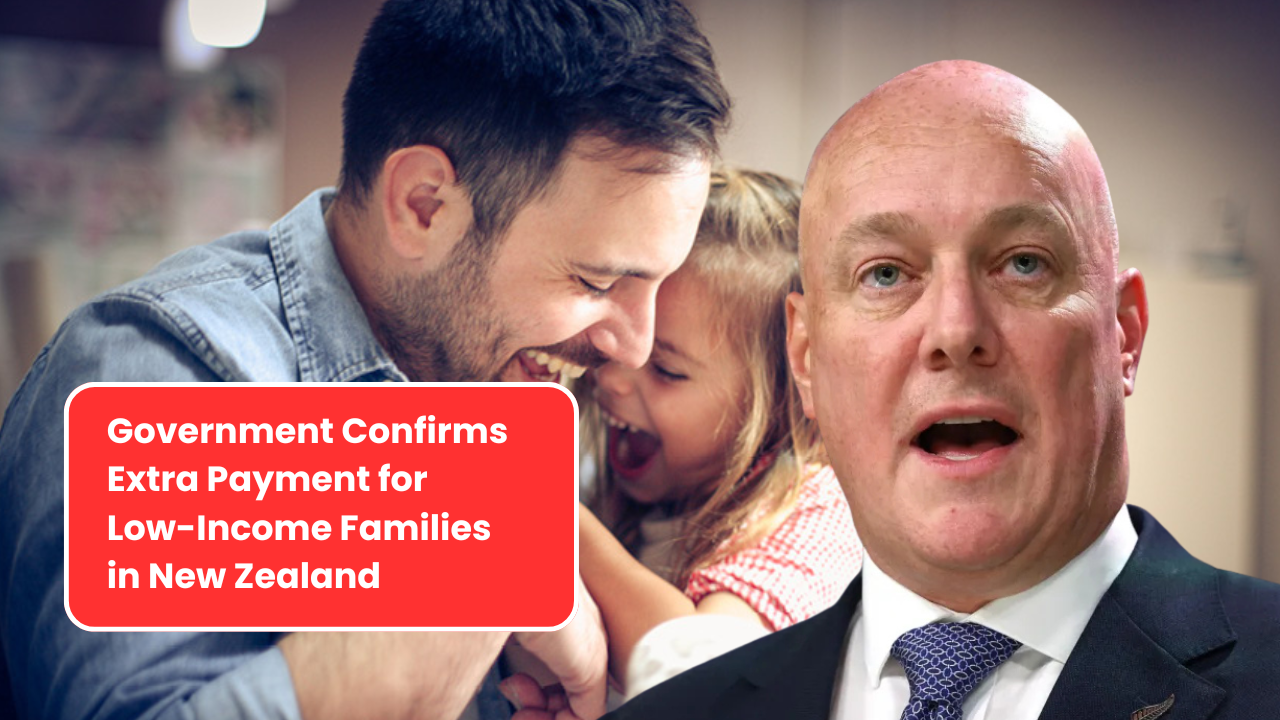
For thousands of low-income families across New Zealand, December has brought welcome financial relief after the Government confirmed an extra payment designed to ease pressure during the most expensive time of the year. While many households are still struggling with rising food prices, higher power bills, and holiday-related costs, officials say this targeted support is meant to arrive before Christmas, when it can make the biggest difference.
The payment is not a permanent benefit increase and not a one-size-fits-all bonus. Instead, it forms part of a year-end support package for families already receiving assistance, with the aim of preventing short-term hardship from becoming long-term financial stress.

In Manukau, single mother Ana said the confirmation lifted a weight off her shoulders. “December is brutal on a tight budget. Knowing something extra is coming means I don’t have to choose between groceries and power.”
In Palmerston North, a couple with two young children said the payment would go straight toward essentials. “It won’t change everything, but it fills a gap that always opens up this time of year.”
Here is what families need to know about the extra payment, who qualifies, how it works, and why December was chosen.

What the extra payment actually is
The confirmed payment is a one-off or short-term additional support payment delivered through existing family assistance systems. It does not replace regular entitlements and does not require families to move onto a new scheme.
The payment works by:
- Adding a temporary top-up to existing family support
- Recognising higher December living costs
- Reducing the risk of emergency assistance needs in January
Officials stress that the payment is targeted, not universal, and is designed to reach households already assessed as needing support.

A Government spokesperson described it as “timely reinforcement of support where it’s most needed.”
Why the payment is being made now
December consistently places the greatest pressure on low-income households.
Key reasons include:

- Higher food costs during the holidays
- Increased power and utility usage
- School holiday expenses
- Reduced work hours for some parents
- Payment timing disruptions due to public holidays
Rather than responding after families fall behind, the Government says this payment is about preventing hardship before it escalates.
Officials say January emergency assistance requests spike every year — and this payment aims to reduce that surge.
Who qualifies for the extra payment
Eligibility is based on existing support status and household circumstances, not a new application process.

Families most likely to qualify include:
- Low-income households receiving family assistance
- Families with dependent children
- Single-parent households on support
- Families with high housing or energy costs
- Households with limited or unstable income
Importantly, most eligible families do not need to apply. Payments are processed automatically where possible.
Those not currently receiving support are unlikely to qualify unless they meet existing eligibility rules.

How the payment will be delivered
The extra payment is delivered through the same system families already use.
This means:
- Funds are deposited into the usual bank account
- The payment appears alongside or near regular support
- No separate claim form is required for most families
Because of public holidays, some families may see the payment arrive earlier than expected, while others may receive it closer to the end of December.

Officials advise families to check bank statements carefully rather than waiting for a separate notice.
How much families can expect
The exact amount varies depending on household circumstances.
Factors that affect the payment include:

- Number of children
- Household income level
- Existing support received
- Housing and cost pressures
Some families will receive a modest top-up, while others may see a more noticeable amount.
A budgeting adviser said, “It’s not designed to be flashy. It’s designed to close a gap.”
Why amounts are not the same for everyone
Some families have expressed frustration that payments are not equal.
Officials say this is intentional.
The payment is:
- Needs-based, not universal
- Scaled to existing support
- Designed to target pressure points
Households already receiving higher levels of assistance may see smaller changes, while those closer to hardship thresholds may see more.
A community advocate said, “Fair doesn’t always mean equal. It means effective.”

How families are using the extra payment
Early feedback suggests families are prioritising essentials.
Common uses include:
- Grocery shopping
- Power and heating bills
- Clearing overdue expenses
- School holiday costs
- Transport and fuel
Very few families report using the money for non-essential spending.
A parent in Whangārei said, “It’s already gone — but it went where it needed to.”
Why December timing matters so much
December is financially fragile for low-income households.
Even small disruptions can lead to:
- Overdrafts
- Missed bills
- Accumulating debt
- Increased stress and anxiety
By placing support into accounts before or during December, the payment helps families manage cash flow during a critical window.
A social worker said, “It’s much easier to prevent a crisis than fix one in January.”
Families most at risk of missing out
While most payments are automatic, some families may miss out if details are outdated.
High-risk situations include:
- Recently changed bank accounts
- Moves not reported
- Changes in custody or household structure
- Missed correspondence
Officials encourage families to ensure details are current to avoid delays.
What families should do now
Families who believe they may qualify should:
- Check recent payments carefully
- Review any notices received
- Ensure contact and bank details are correct
- Act quickly if something looks wrong
Waiting until January may delay help when it’s needed most.
What this payment is not
To avoid confusion, it’s important to clarify what the payment does not represent.
It is not:
- A permanent benefit increase
- A universal Christmas bonus
- A replacement for regular support
- A loan or repayable advance
It is a temporary support measure aimed at easing seasonal pressure.
How this affects working families
Many recipients are working parents.
For them, December can be unpredictable due to:
- Reduced shifts
- School holiday childcare costs
- Casual or variable income
The payment helps smooth income during weeks when work patterns change.
A working parent said, “I’m still working, but December pay never stretches. This helped bridge the gap.”
Single parents see the biggest impact
Single-parent households are among the most affected by December costs.
With:
- One income
- Full responsibility for children
- Limited flexibility
Even a small top-up can reduce pressure significantly.
Advocacy groups say this payment is particularly important for these families.
How this compares to past support
Similar year-end support has been provided in previous years, but this year’s version is:
- More targeted
- Delivered faster
- Better aligned with real costs
Officials say lessons from past years helped shape the current approach.
What the Government says
Officials frame the payment as part of a broader cost-of-living response.
A Government representative said,
“We know December puts families under strain. This payment is about stability and dignity.”
Authorities say they will continue monitoring household pressures into the new year.
What happens after December
The extra payment does not continue indefinitely.
In January:
- Regular support resumes as normal
- One-off or temporary top-ups end
- Households return to standard payment cycles
Families are advised not to assume December levels will continue.
Budgeting advice for families receiving the payment
To maximise the benefit, families are encouraged to:
- Prioritise essentials
- Avoid creating new ongoing expenses
- Plan for January costs
- Use the payment to reduce stress points
A budgeting service advisor said, “Using it to stabilise, not splurge, makes the biggest difference.”
Real stories from families
A family in Porirua said the payment helped avoid borrowing.
“We didn’t need to use the credit card.”
A mother in Gisborne said it covered power bills.
“That alone helped me sleep better.”
A couple in Invercargill said it eased food costs.
“We could shop without panic.”
Why this support matters beyond money
Beyond finances, the payment reduces:
- Stress
- Anxiety
- Family tension
Support arriving at the right time can improve wellbeing, not just budgets.
A community worker said, “Relief isn’t just financial. It’s emotional.”

Key things to remember
- The Government has confirmed an extra payment for low-income families
- It is targeted and temporary
- Most families do not need to apply
- December timing is intentional
- The payment helps with essentials
- Details must be up to date to avoid delays
For many households, this support arrives just in time.
Q&A: Extra payment for low-income families
- Is this a permanent increase?
No. - Is it a Christmas bonus?
No. - Do I need to apply?
Usually no. - Who qualifies?
Low-income families on support. - Will everyone get the same amount?
No. - When will it arrive?
During December. - Can it arrive early?
Yes. - Is it repayable?
No. - Does it affect January payments?
No. - What if I don’t receive it?
Check your details and ask. - Are working families included?
Yes. - Are single parents included?
Yes. - Is this taxable?
No. - Will it continue next year?
Not guaranteed. - What should families do now?
Check payments and plan ahead.










Leave a Comment