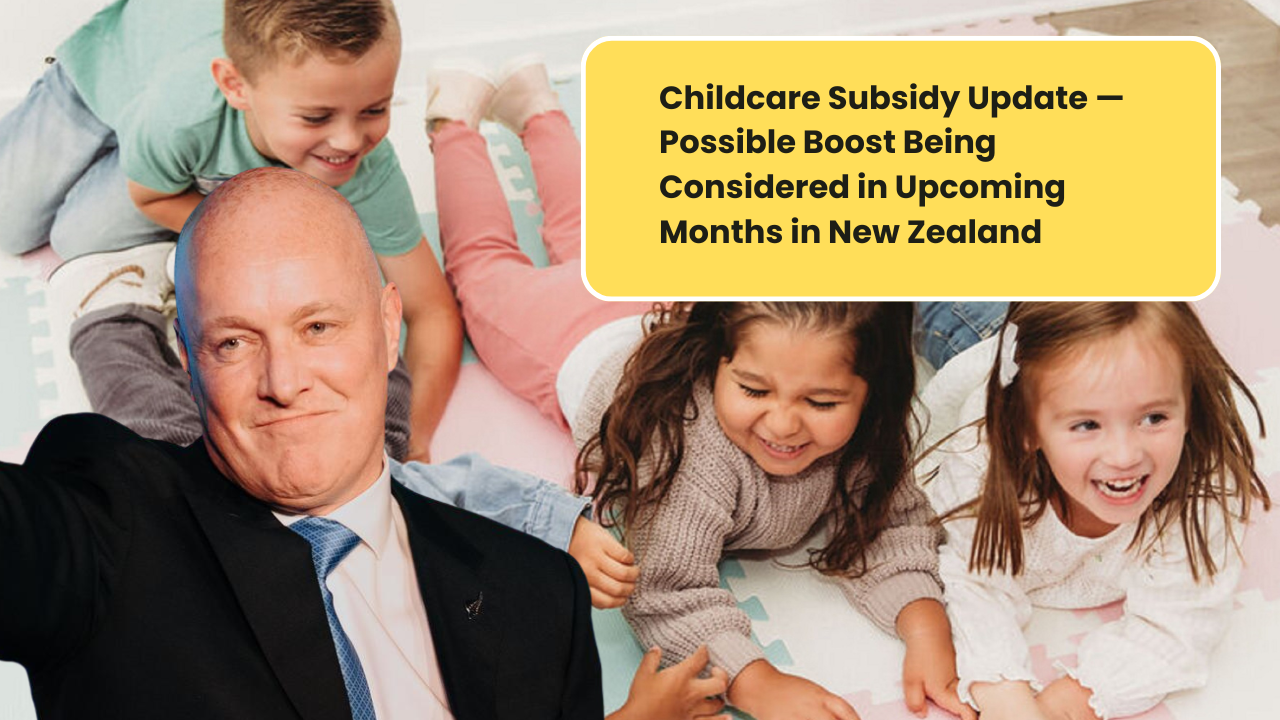
For many parents across New Zealand, the cost of childcare is not just another household expense — it is the deciding factor in whether working more hours is even possible. Each week, families weigh wages against fees, calculating whether childcare makes financial sense at all. In 2025, that calculation remains difficult, especially for low- and middle-income households.
With workforce participation, early childhood education, and cost-of-living pressures colliding, childcare subsidies are once again under close review. Discussions about a possible boost to childcare support in the coming months have gained attention, raising hopes among parents struggling to keep up with fees that continue to rise faster than incomes.
While no confirmed increase has been announced yet, the direction of policy conversations signals growing recognition that childcare affordability has become a major economic and social issue.


Why Childcare Costs Remain a Pressure Point
Childcare is one of the largest regular expenses for families with young children. In some regions, weekly fees rival rent or mortgage payments, particularly for infants and toddlers.
Key challenges families face include:
- High hourly childcare fees
- Limited availability of subsidised hours
- Regional fee disparities
- Rising staffing and compliance costs for providers
- Income thresholds that lag behind real living costs
For parents on modest incomes, childcare can consume a substantial share of take-home pay.
What’s Changing / What’s New in 2025
While existing childcare subsidies remain in place, several developments have brought possible changes into focus:
- Reviews of childcare affordability and workforce participation
- Pressure to adjust subsidy income thresholds
- Discussions around increasing subsidy rates
- Focus on supporting parents returning to work
- Attention on inequities between regions and family types
These discussions are happening alongside broader cost-of-living and labour market reviews.
How Childcare Subsidies Currently Work
Childcare subsidies in New Zealand are primarily income-tested and administered through existing support systems.

Key features include:
- Subsidies based on household income
- Higher support for younger children
- Limits on subsidised hours
- Payments made directly to childcare providers
- Regular reassessments as income changes
For many families, subsidies reduce but do not eliminate out-of-pocket costs.
Who Benefits Most From Childcare Subsidies
Subsidies are designed to support families most at risk of being priced out of early childhood education.

Groups most affected include:
- Low- and middle-income working families
- Sole parents
- Families with multiple children in care
- Parents re-entering the workforce
- Households facing high housing costs
For these families, even small changes in subsidy levels can make a meaningful difference.
Real Stories From Parents Managing Childcare Costs
In Tauranga, retail worker Jess says childcare determines how many hours she can work. “If fees go up, I have to cut shifts. It doesn’t add up.”

In South Auckland, father of two Sam explains the trade-offs. “We want our kids in quality care, but every increase means cutting somewhere else.”
Their experiences reflect a wider pattern where childcare affordability directly affects employment decisions.
Government Perspective on Childcare Support
Government officials have acknowledged that childcare affordability is closely linked to economic participation.

A spokesperson involved in family policy said, “Affordable childcare supports parents to work, supports child development, and supports the wider economy. It’s an area under active consideration.”
Officials have also noted the need to balance family support with the sustainability of childcare providers.

Expert Analysis: Why Subsidy Increases Are Being Considered
Economists and social policy experts increasingly view childcare as economic infrastructure rather than a private expense.

Key expert insights include:
- Affordable childcare boosts workforce participation
- Parents, especially women, reduce hours due to high fees
- Early childhood education improves long-term outcomes
- Subsidies can reduce child poverty indirectly
Labour economist Dr. Melissa Grant notes, “When childcare costs fall, labour supply rises — the data is very clear.”
Possible Forms a Subsidy Boost Could Take
While no final decisions have been made, several options are commonly discussed.

Potential approaches include:
- Raising income thresholds
- Increasing subsidy rates per hour
- Expanding subsidised hour caps
- Additional support for infants
- Targeted boosts for high-cost regions
Any changes would likely be phased in rather than introduced all at once.
How a Boost Could Affect Working Families
For working parents, even a modest subsidy increase could:
- Make additional work hours viable
- Reduce financial stress
- Improve job stability
- Increase disposable income for essentials
These effects extend beyond families to employers and the wider economy.
Impact on Sole Parents
Sole parents are particularly sensitive to childcare costs.
Common challenges include:
- Limited flexibility in work hours
- Higher reliance on paid childcare
- Greater exposure to income changes
- Fewer informal care options
Targeted subsidy increases could significantly improve financial stability for these households.
Regional Differences in Childcare Costs
Childcare costs vary widely across New Zealand.
Factors driving regional variation include:
- Staff shortages
- Property costs
- Demand pressures
- Local wage levels
Policy discussions increasingly acknowledge that a one-size-fits-all subsidy may not address regional inequities.
What This Means for Childcare Providers
Providers also face rising costs, including wages, compliance, and utilities.
From a provider perspective:
- Subsidy increases can improve affordability for families
- Stable funding supports staff retention
- Predictable subsidies reduce payment delays
- Sustainability depends on balanced policy design
Any changes must consider both families and providers to avoid unintended consequences.
What You Should Know Right Now
At this stage:
- No subsidy increase has been confirmed
- Existing subsidies remain unchanged
- Policy reviews are ongoing
- Any boost would likely be targeted
- Announcements may come alongside budget or economic updates
Families should plan based on current support levels until changes are confirmed.
Steps Parents Can Take Now
Parents navigating childcare costs can:
- Review current subsidy eligibility
- Update income details promptly
- Compare provider fees carefully
- Factor childcare costs into work decisions
- Seek budgeting advice if needed
Staying informed ensures families receive the full support they are entitled to.

Q&A: Childcare Subsidy Update in New Zealand
1. Is a childcare subsidy increase confirmed for 2025?
No, it is still under discussion.
2. Who would benefit most from a boost?
Low- and middle-income families.
3. Would I need to apply again?
Likely no, if already receiving support.
4. Could income thresholds change?
Yes, this is being considered.
5. Would sole parents benefit?
Yes, potentially significantly.
6. Are subsidies paid to parents?
No, they are paid to providers.
7. Could hours caps increase?
Possibly, but not confirmed.
8. Will fees go down if subsidies rise?
Out-of-pocket costs would likely fall.
9. Are students eligible?
Some student parents may qualify.
10. Does this affect free ECE hours?
No, they operate separately.
11. Will regional costs be considered?
This is part of current discussions.
12. When could changes take effect?
If approved, later in the year.
13. Will providers benefit?
Indirectly, through improved affordability.
14. Should families delay decisions?
No, plan based on current rules.
15. Where will updates be announced?
Through official government channels.










Leave a Comment