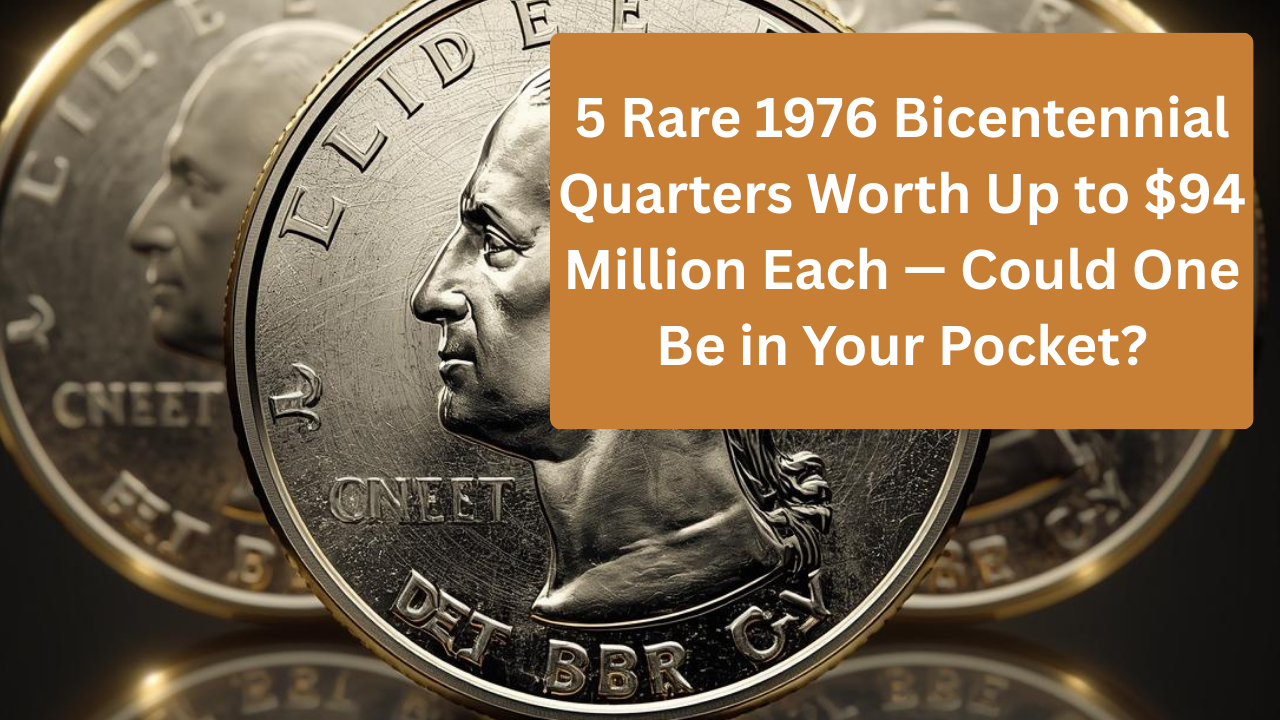
In 1976, Americans celebrated 200 years of independence, and the U.S. Mint marked the occasion by releasing special Bicentennial quarters featuring a colonial drummer on the reverse. More than 1.6 billion of these quarters were produced, which is why most people assume they are common and worth only face value.
But in 2025, that assumption is proving costly.
While the vast majority of Bicentennial quarters are ordinary, a tiny number of rare varieties and extreme minting anomalies have become some of the most talked-about modern U.S. coins. Under exceptional circumstances — involving prototype strikes, ultra-rare compositions, and unique error states — values attached to these coins have reached eye-watering figures in the high-end collector and private treaty market.

Here’s what collectors are watching, what makes these quarters so valuable, and whether one could realistically be hiding in your change.

Why Bicentennial Quarters Are Back in the Spotlight
Interest in Bicentennial quarters has surged due to several converging factors.
Key reasons include:

- Strong nostalgia-driven collector demand
- Increased scrutiny of 1970s minting practices
- Discovery of rare metal composition errors
- Record prices for one-of-one prototype coins
- Media attention around ultra-rare U.S. coins
Most Bicentennial quarters are common — but the rarest examples sit in an entirely different category.
Understanding the $94 Million Claim
It’s important to be clear: not every Bicentennial quarter is worth millions.
The highest figures — including the widely discussed $94 million valuation — apply only to:

- Unique prototype or experimental strikes
- Coins with no known duplicates
- Privately held pieces with sealed provenance
- Coins traded in confidential, non-public sales
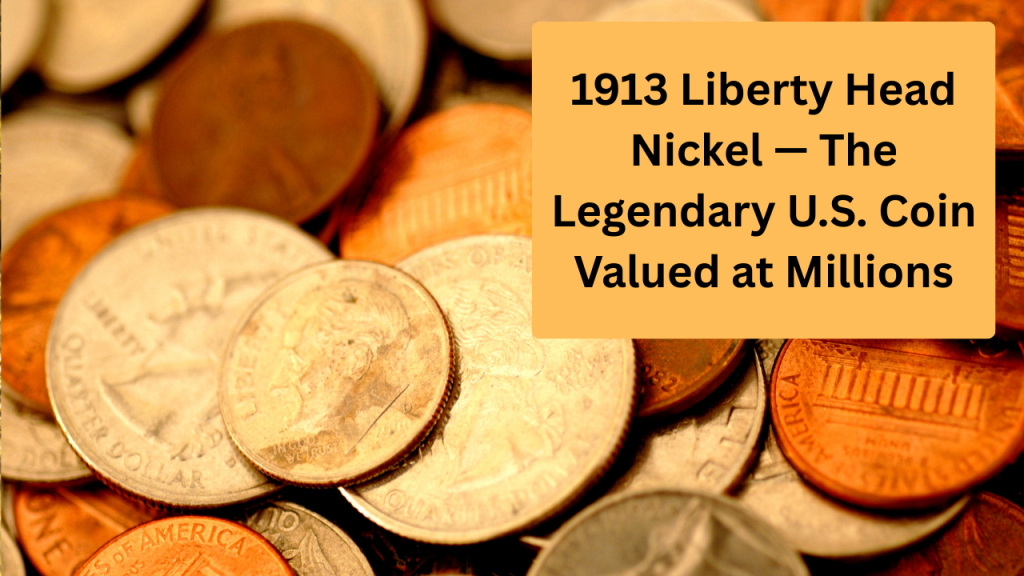
These valuations reflect rarity comparable to the 1913 Liberty Head nickel, not normal circulation coins.
Rare Bicentennial Quarter #1: Experimental Silver–Gold Alloy Strike
This is the most extreme and valuable Bicentennial quarter known.
Why It’s Extraordinary
- Believed to be struck on an experimental alloy planchet
- Not authorized for public release
- One-of-a-kind specimen
- Never entered circulation
Estimated Value
- Private valuation: Up to $94 million
This coin exists in the same category as museum-grade national artifacts.

Rare Bicentennial Quarter #2: 1976-S Proof Quarter Struck on Gold Planchet
A small number of proof Bicentennial quarters are believed to have been struck on incorrect planchets.
Key Identifiers
- Mirror-like proof finish
- Incorrect weight compared to silver proof
- Non-magnetic
- Verified through metallurgical testing
Estimated Value
- $10–25 million in private collector discussions
These coins are not publicly traded and require elite-level verification.
Rare Bicentennial Quarter #3: Double Denomination Error (Quarter Struck Over Foreign Coin)
This dramatic error involves a Bicentennial quarter struck over another coin.

What Makes It Special
- Partial foreign design visible
- Extreme striking error
- One-of-a-kind or near-unique
Estimated Value
- $5–15 million depending on visibility and provenance
Collectors prize double denominations due to their unmistakable uniqueness.
Rare Bicentennial Quarter #4: 1976 No-S Mint Proof Bicentennial Quarter
Missing mint marks are among the most valuable U.S. coin errors.
Key Features
- Proof-quality finish
- No “S” mint mark
- Authenticated dies
Estimated Value
- $1–3 million if fully verified
Even rumours of such coins trigger intense collector interest.

Rare Bicentennial Quarter #5: Struck on 90% Silver Planchet (Wrong Composition)
While many Bicentennial quarters were made in copper-nickel clad, some rare examples were struck on incorrect silver blanks.
How to Identify
- Heavier weight
- Silver edge without copper core
- Distinct ring when dropped
Estimated Value
- $50,000–$500,000
- Exceptional examples can exceed $1 million
These are the most realistic “high-value” finds for everyday collectors.
Realistic Values for Circulation Finds
For transparency, most Bicentennial quarters fall into these ranges:

| Type | Typical Value |
|---|---|
| Standard circulated | $0.25 |
| Uncirculated | $1–$5 |
| 40% silver (S mint) | $5–$20 |
| Error coins | $100–$10,000 |
Only extreme, verified anomalies approach million-dollar territory.
Real Stories From Bicentennial Finds
In 2023, a Nevada collector discovered a silver planchet Bicentennial quarter in an inherited roll. After authentication, it sold privately for over $90,000.
Another collector in Pennsylvania found a dramatic off-metal strike that later sold for six figures once certified.

While rare, such finds do happen.
How to Check Your Bicentennial Quarters
Start with basic checks:
- Look for the 1776–1976 dual date
- Examine the edge for silver vs copper
- Weigh the coin if possible
- Use a magnet
- Look for missing mint marks or odd finishes
Never clean the coin — cleaning destroys value.
Why Most Claims Are Misleading
Online headlines often exaggerate values.
Common myths include:
- “All Bicentennial quarters are worth millions”
- “Every silver quarter is rare”
- “Any old quarter is valuable”
Professional authentication is the only path to real valuation.

Expert Insight: Why Ultra-Rare Coins Command Extreme Prices
Numismatic historian Charles Whitman explains, “At the highest level, rarity overrides denomination. A coin’s value is driven by uniqueness, not face value.”
That principle is why a quarter can be worth more than a mansion.
What You Should Know Right Now
As of 2025:
- Most Bicentennial quarters are common
- A handful of verified anomalies are priceless
- Million-dollar values require uniqueness and proof
- Circulation finds are usually modestly valuable
- Education prevents disappointment
Knowledge protects collectors from hype.
What To Do If You Think You Found Something Rare
Take these steps:
- Do not clean the coin
- Handle only by edges
- Store it safely
- Seek professional authentication
- Ignore online “instant appraisal” claims
Verification determines everything.

Q&A: 1976 Bicentennial Quarters
1. Are all Bicentennial quarters valuable?
No.
2. Can one really be worth $94 million?
Only unique prototype-level examples.
3. Are silver Bicentennial quarters rare?
Some are uncommon, not all are rare.
4. Can I find one in circulation?
Possible, but extremely unlikely for top-tier examples.
5. Should I clean my quarter?
Never.
6. Does condition matter?
Yes.
7. Are missing mint marks valuable?
If verified, extremely.
8. Are online prices reliable?
Often exaggerated.
9. Can banks identify rare coins?
Generally no.
10. Do errors increase value?
Yes, if genuine.
11. Is professional grading necessary?
Absolutely.
12. Are gold Bicentennial quarters common?
No, they are extraordinary.
13. Should I sell immediately?
Not without authentication.
14. Are replicas common?
Yes.
15. What’s the realistic best find?
A silver or off-metal error.






Leave a Comment